In our increasingly connected world, where smartphones, tablets, and laptops are indispensable for work, entertainment, and communication, the last thing anyone wants is a dead battery. While many devices offer impressive battery life, the need for a reliable power source at home—especially during unexpected power outages or when managing multiple gadgets simultaneously—makes a power bank an essential household item. This comprehensive guide will help you navigate the vast market, decode the technical jargon, and select the ideal power bank to keep all your home devices powered up and ready for anything.
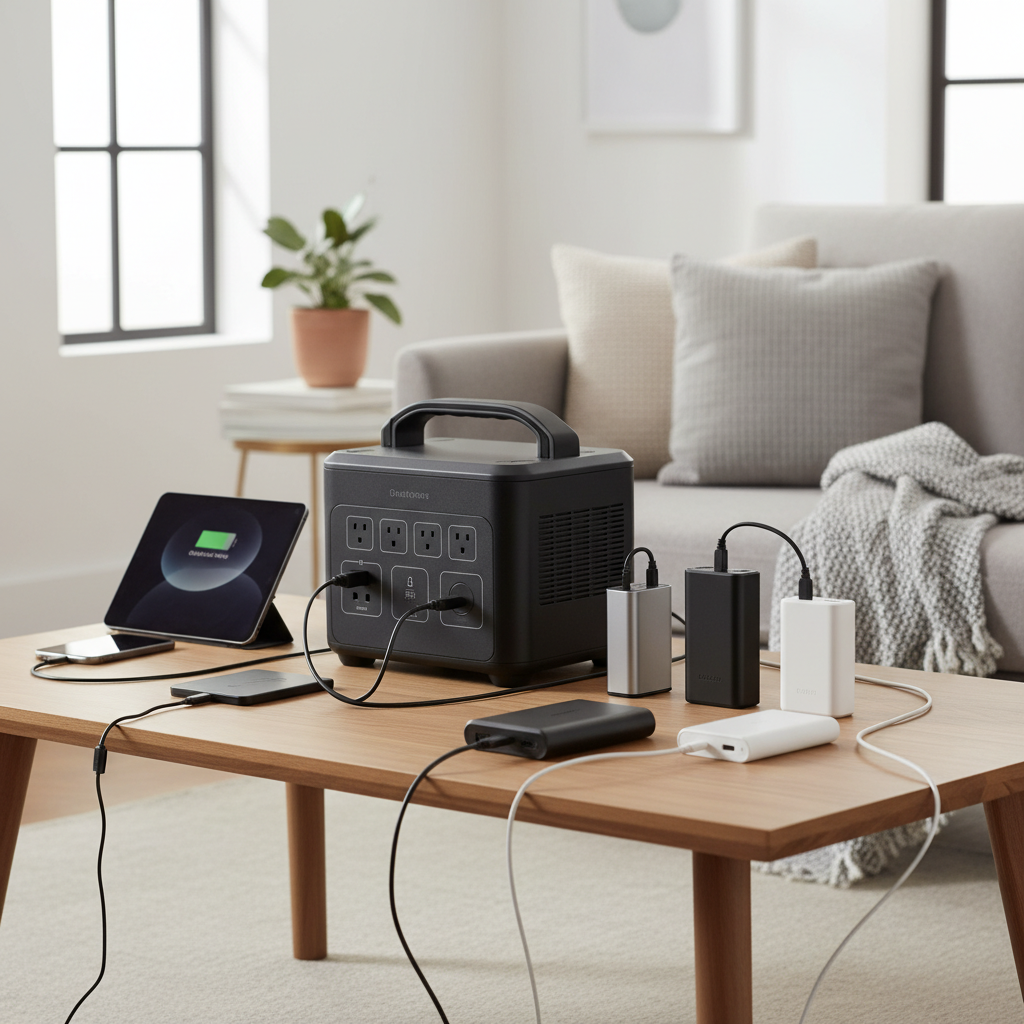
Power Banks: Your Essential Mobile Energy Solution
A power bank, often called a portable charger or external battery, is a device designed to store electrical energy and deliver it to your electronic gadgets on demand. At its core, a power bank contains lithium-ion or lithium-polymer battery cells, which are capable of holding a charge and then discharging it through various output ports. Initially simple backup batteries, power banks have evolved into sophisticated devices that can offer rapid charging, support multiple devices, and even provide specialized functionalities like wireless charging or laptop power. Their importance in modern life cannot be overstated; they serve as a critical lifeline during travel, commutes, and particularly during emergencies or blackouts, ensuring you remain connected and productive when traditional power outlets are unavailable.
Exploring the Diverse Types of Power Banks
The power bank market is rich with variety, offering solutions tailored to different needs and device ecosystems. Understanding these distinctions is key to making an informed choice.
Classification by Capacity (mAh)
Capacity, measured in milliampere-hours (mAh), indicates the amount of energy a power bank can store. This is often the first specification people look at, as it directly relates to how many times a device can be charged.
- 5,000 – 10,000mAh: These are compact and lightweight, ideal for daily use, providing 1-2 full smartphone charges. They are perfect for ensuring your phone doesn’t die during a short outing or as a quick emergency boost.
- 10,000 – 20,000mAh: Often considered the “sweet spot” for many users, these power banks offer a balance between portability and ample power. They can typically charge a smartphone 2-3 times and are suitable for weekend trips or for households with multiple devices needing regular top-ups.
- 20,000mAh and above: These high-capacity power banks are designed for heavy users, frequent travelers, or homes requiring power for multiple devices, including tablets and even laptops. Models in this range can provide several full charges for smartphones and often support more power-intensive devices.
|
Our Picks for the Best Power bank in 2026
As an Amazon Associate I earn from qualifying purchases.
|
||
| Num | Product | Action |
|---|---|---|
| 1 | INIU Portable Charger, Ultra Slim 45W Fast Charging with Attached USB C Cable, Flight-Safe 10000mAh PD Power Bank Battery Pack, Travel Essential Phone Powerbank for iPhone 17 16 Samsung S25 Google etc |

|
| 2 | Anker Zolo Power Bank (2025 Upgraded Version), 20,000mAh 30W High-Speed Portable Charger with Built-in USB-C Cable, Battery Pack for iPhone 17/16 / 15 Series, Galaxy, and More |
|
| 3 | Anker Prime Power Bank, 26,250mAh 3-Port Portable Charger with 300W Max Output, Two-Way Charging, TSA-Approved, App Control, for MacBook, iPhone 17/16 Series, and More (Base Not Included) |
|
| 4 | charmast Portable Charger with Built in Cables, Power Bank with Cords Wires, Slim 10000mAh Travel Battery Pack 6 Outputs 3 Inputs 5A Fast Charging for Samsung Google Pixel LG Moto iPhone iPad |
|
| 5 | Portable Charger Power Bank, 60000mAh Battery Pack with 3 in 1 USB-C/iOS/Micro-USB Cable, 22.5W Fast Charging Portable Phone Charger, Travel Camping Essential Powerbank for iPhone 17/16 Samsung,Ebony |
|
| 6 | Anker Power Bank(PowerCore 10K), Compact Travel-Ready 10,000mAh Battery Pack with PowerIQ Charging Technology, 5V/3A High-Speed Charging for iPhone, iPad,and More (1, Black) |
|
| 7 | Anker MagGo Power Bank, Ultra-Slim 10,000mAh Magnetic Battery Pack, Qi2 Certified 15W Ultra-Fast MagSafe Compatible Portable Charger, Ergonomic Design, for iPhone17/16/15/14 Series Only(Not for Pixel) |
|
| 8 | Anker 737 Power Bank, 140W Max 3-Port Laptop Portable Charger, 24,000mAh, Smart Display, Compatible with iPhone 16 / 15 / 14 Series, Vision Pro, Samsung, MacBook, and More |
|
| 9 | Anker Power Bank, 20,000mAh Travel Essential Portable Charger with Built-in USB-C Cable, 3-Port 87W Max Fast Charging Battery Pack, for MacBook, iPhone 16/15 Series, Samsung, Switch, and More |
|
| 10 | UGREEN QI2 Power Bank, 8.6mm Ultra-Slim 5000mAh Magnetic Battery, 20W PD Fast Charging Portable Charger, MagSafe-Compatible External Battery for iPhone 17/16/15/14 Series, Blue |
|
Classification by Charging Technology
Modern power banks incorporate various charging technologies to deliver power more efficiently and quickly.
- Quick Charge (QC): Developed by Qualcomm, Quick Charge is a widely adopted fast-charging protocol primarily found in Android devices. It works by increasing the voltage to deliver power faster, capable of charging compatible phones to 50% in minutes.
- Power Delivery (PD): This is an open standard established by the USB Implementers Forum, delivering high power (up to 100W or more) through USB-C ports. PD is versatile, supporting phones, tablets, and many laptops, and it allows power to flow in both directions, meaning it can both charge devices and be recharged quickly.
- PPS (Programmable Power Supply): A newer feature of USB Power Delivery, PPS fine-tunes the voltage and current in real-time. This dynamic adjustment improves charging efficiency and helps manage heat, which is beneficial for battery health.
- Wireless Charging: For ultimate convenience, some power banks feature wireless charging pads, often compatible with Qi or MagSafe standards. While generally less efficient than wired charging, it eliminates the need for cables.
[image-1|types-of-power-banks|Various power bank types categorized by capacity and charging technology for home use|
An illustrative infographic displaying different power bank capacities (5,000mAh, 10,000mAh, 20,000mAh+) with corresponding device icons (smartphone, tablet, laptop) and symbols representing various charging technologies like USB-C PD, Quick Charge, and a wireless charging icon. The style should be clean, modern, and easy to understand with a neutral color palette. Overhead shot with soft studio lighting.]
Classification by Features
Beyond capacity and core technology, power banks come with a host of additional features that enhance usability.
- Multiple Ports: Many power banks offer a combination of USB-A and USB-C ports, allowing simultaneous charging of several devices. Some even include built-in cables (USB-C, Lightning, Micro USB) for added convenience, reducing the need to carry extra accessories.
- Integrated Wall Plug: A select few power banks include a foldable AC wall plug, enabling them to double as a wall charger and making it incredibly easy to recharge the power bank itself.
- LCD Display: Higher-end models may feature an LCD or LED display that shows the remaining battery percentage, charging status, and even real-time wattage output.
- Rugged Design: For outdoor enthusiasts or those prone to accidental drops, some power banks boast durable, rugged casings with IP ratings for water and dust resistance.
- Trickle-Charge Mode: This feature provides a low-power charge suitable for small devices like earbuds, smartwatches, or Bluetooth headphones, preventing overcharging and extending their battery life.
Your Guide to Selecting the Right Power Bank
Choosing a power bank for your home requires careful consideration of your specific needs, the devices you own, and your priorities regarding speed, safety, and budget.
Determine Your Usage Needs
Before diving into specifications, assess what you primarily need the power bank for.
- Which devices do you need to charge? (e.g., just smartphones, tablets, e-readers, or more power-hungry laptops and portable gaming consoles?)
- How many devices do you typically need to charge at once?
- How many full charges do you anticipate needing between recharges of the power bank? For daily phone top-ups, 5,000-10,000mAh might suffice. For powering multiple devices or a laptop during a power outage, 20,000mAh or more is recommended.
- Do you need special features like fast charging for quick boosts, wireless charging for convenience, or built-in cables for a minimalist setup?
Match Charging Technology and Speed
The output wattage of a power bank determines how quickly it can charge your devices.
- Standard charging is typically 5-12W.
- For fast charging most modern smartphones, look for at least 18W. This can often take your phone from 0% to 50% in about 30 minutes.
- For premium smartphones, tablets, or small laptops, 30-45W is ideal.
- Laptops and multiple high-power devices will benefit from power banks offering 65W, 100W, or even higher output via USB-C Power Delivery. Ensure your devices support these fast-charging protocols (PD, QC, PPS) to maximize efficiency.
- Don’t forget the power bank’s input speed: A power bank is only as useful as how quickly it can recharge itself. Look for models with USB-C input supporting Power Delivery (18W or higher) to minimize downtime.
Prioritize Safety Features
Safety is paramount when dealing with portable batteries. A quality power bank should incorporate multiple layers of protection to prevent accidents and extend its lifespan. Look for features such as:
- Overcharging protection: Prevents the battery from being overcharged, which can degrade its cells.
- Short-circuit protection: Automatically cuts off power in case of a short circuit.
- Over-discharge protection: Prevents the battery from draining completely, which can cause damage.
- Overheating/Thermal runaway safeguards: High-quality power banks are designed to manage heat and prevent dangerous thermal runaway, which can lead to fire hazards.
- Certifications: Always check for international safety certifications like CE (Europe), FCC (USA), and BSMI (Taiwan). These indicate that the product meets recognized safety and quality standards. Avoid cheap, unbranded power banks that may lack these crucial safeguards.
Consider Brand Reputation and Warranty
Choosing a reputable brand offers peace of mind regarding product quality, reliability, and customer support. Brands like Anker are consistently praised for their robust performance, advanced safety mechanisms, and broad compatibility. Other trusted brands frequently mentioned for their quality and innovation include Xiaomi, Samsung, RAVPower, UGREEN, INIU, EcoFlow, and Belkin. A good warranty policy also signifies a manufacturer’s confidence in their product.
Power Bank Usage and Maintenance Best Practices
To maximize your power bank’s lifespan and ensure optimal performance, follow these simple usage and maintenance tips:
- Charge it correctly: Always use a compatible charger and cable with your power bank. Matching the charger’s wattage to the power bank’s input rating ensures efficient and safe recharging. Avoid using low-wattage chargers for high-capacity power banks, as this will result in extremely slow charging times.
- Avoid extreme temperatures: Lithium-ion batteries degrade faster when exposed to excessive heat or cold. Store your power bank in a cool, dry place and avoid leaving it in direct sunlight or freezing conditions.
- Don’t over-discharge or overcharge: While most modern power banks have built-in protection circuits, it’s generally good practice to recharge your power bank before it completely drains and disconnect it once fully charged.
- Use quality cables: Invest in durable, high-quality charging cables. Flimsy or damaged cables can impede charging speed and even pose a safety risk.
[image-2|power-bank-maintenance-tips|Tips for effective power bank maintenance and safe charging practices|
An instructional image showing a power bank being charged with a quality cable and adapter, alongside icons representing best practices such as avoiding extreme temperatures, not over-discharging, and using certified accessories. The style should be clean, with clear graphics and text, an infographic aesthetic, and soft, even lighting.]
Addressing Common Power Bank Issues
Even with a high-quality power bank, you might encounter a few common issues. Knowing how to troubleshoot them can save you time and frustration.
- Power bank not charging devices:
- Check cables: Ensure all cables are securely connected and not damaged. Try a different cable.
- Check ports: Make sure the ports on both the power bank and your device are clean and free of debris.
- Compatibility: Verify that the power bank’s output is sufficient for your device. Some devices, especially laptops, require higher wattage.
- Power bank itself is drained: Check the power bank’s indicator lights or display to ensure it has enough charge.
- Power bank charging slowly:
- Low-wattage charger: If the power bank itself is charging slowly, the wall adapter you’re using might be too weak. Use a charger with a higher output (e.g., 18W+ for PD-compatible power banks).
- Charging multiple devices: When charging several devices simultaneously, the power output is often split, leading to slower charging for each individual device.
- Using device while charging: Actively using your phone or laptop while it’s connected to a power bank can slow down the charging process, as power is being consumed simultaneously.
- Cable quality: A low-quality or damaged charging cable can restrict power flow.
- Power bank getting hot during charging:
- It’s normal for power banks to get slightly warm during charging or discharging.
- Excessive heat (uncomfortably hot, burning smell): This is a red flag. Disconnect the power bank immediately. It could indicate a faulty unit or a safety issue like thermal runaway. Ensure you’re not using it in direct sunlight or a confined space with poor ventilation.
Maximize Your Power Bank Experience
Getting the most out of your power bank involves smart usage and knowing a few tricks.
- Optimal use during power outages: A fully charged, high-capacity power bank can be a lifesaver during extended power outages. Prioritize charging essential communication devices like phones first. If you have a larger power bank, it can even keep small lamps or Wi-Fi routers running for a limited time.
- Trickle charging for small accessories: Utilize the low-current charging mode on compatible power banks for wearables, Bluetooth headphones, and other tiny gadgets to ensure they charge safely without damage.
- Battery efficiency: Understand that a power bank’s rated capacity (mAh) is its internal battery capacity. The actual usable capacity (or “rated capacity”) will be about 60-70% of this due to energy conversion losses. Factor this into your calculations when determining how many charges you’ll get for your devices.
“A power bank isn’t just about topping up your phone; it’s about empowerment and peace of mind. Knowing you have reliable, portable energy can change how you navigate your day, especially when the unexpected happens.” – Sarah Chen, Senior Tech Analyst at Gadget Insights.
Power Bank Buying Guide: A Checklist for Your Home
To simplify your selection process, here’s a comprehensive buying guide:
1. Define Your Charging Needs:
- Devices: List all devices you plan to charge (smartphone, tablet, laptop, smartwatch, e-reader, etc.).
- Capacity: Estimate the total mAh needed. As a rule of thumb, for smartphones, aim for a power bank with 2-3 times your phone’s battery capacity. For multiple devices or laptops, consider 20,000mAh and above.
- Features: Do you need fast charging (PD, QC), wireless charging, built-in cables, or multiple ports?
2. Research Brands and Products:
- Read reviews and comparison articles from reputable tech sites.
- Look for well-known brands with a history of reliable products and good customer service (e.g., Anker, UGREEN, EcoFlow, Belkin, INIU).
- Compare prices, but be wary of excessively cheap options that might compromise on quality and safety.
3. Scrutinize Technical Specifications:
- Capacity (mAh): Ensure it meets your estimated needs, remembering the 60-70% usable capacity rule.
- Output Power (W/A): Match the wattage to your devices’ fast-charging capabilities (18W+ for phones, 45W+ for laptops).
- Input Power (W): Check how quickly the power bank can recharge itself. Higher wattage input (e.g., 18W+ via USB-C PD) means faster recharges.
- Port Types & Quantity: Ensure it has the right mix of USB-A and USB-C ports for your devices.
4. Prioritize Safety Certifications:
- Always choose power banks with recognized safety certifications (CE, FCC, RoHS, UL). This is non-negotiable for protecting your devices and home.
- Avoid power banks that feel flimsy, are unusually light for their advertised capacity, or have no clear brand or safety markings. Never use a power bank that appears swollen or damaged.
5. Purchase from Authorized Retailers:
- Buy your power bank from reputable retailers, whether online or brick-and-mortar stores. This helps ensure you receive a genuine product with a valid warranty.
- Keep your receipt for warranty claims if needed.
Conclusion
A well-chosen power bank is more than just an accessory; it’s a fundamental tool for maintaining connectivity and peace of mind in any modern home. By understanding your charging needs, prioritizing capacity and fast-charging technologies like Power Delivery, and never compromising on safety features, you can confidently select a portable charger that perfectly fits your lifestyle. Invest wisely, and you’ll always have reliable power at your fingertips, whether you’re at home or on the go.
What new devices are you hoping to keep charged with your next power bank?
Frequently Asked Questions
What exactly does “mAh” mean in power banks?
mAh stands for milliampere-hours and is the primary unit used to measure a power bank’s battery capacity. A higher mAh rating indicates a larger “fuel tank,” meaning the power bank can store more energy and provide more charges to your devices before needing to be recharged itself.
Do I really need a power bank with Power Delivery (PD) or Quick Charge (QC)?
If your smartphone, tablet, or laptop supports fast-charging protocols like Power Delivery (PD) or Quick Charge (QC), then choosing a power bank that also supports these technologies will significantly reduce your charging times. It’s highly recommended for a better and quicker charging experience for compatible devices.
What is the difference between “battery capacity” and “rated capacity”?
“Battery capacity” (stated capacity) is the total energy the lithium battery holds. “Rated capacity” (actual usable capacity) is the real power available after accounting for energy conversion losses within the power bank, typically around 60% to 70% of the stated battery capacity.
How many watts signify a “fast-charging” power bank?
Generally, a power bank is considered “fast-charging” if it has an output of 18 watts (W) or more. For more power-hungry devices like laptops, fast charging can mean 45W, 65W, 100W, or even higher, especially when utilizing USB Power Delivery.
Can I charge my laptop with any power bank?
No, not all power banks can charge laptops. Laptops typically require a higher wattage output (usually 45W or more) and often a USB-C Power Delivery (PD) port. Ensure the power bank’s output matches or exceeds your laptop’s charging requirements.