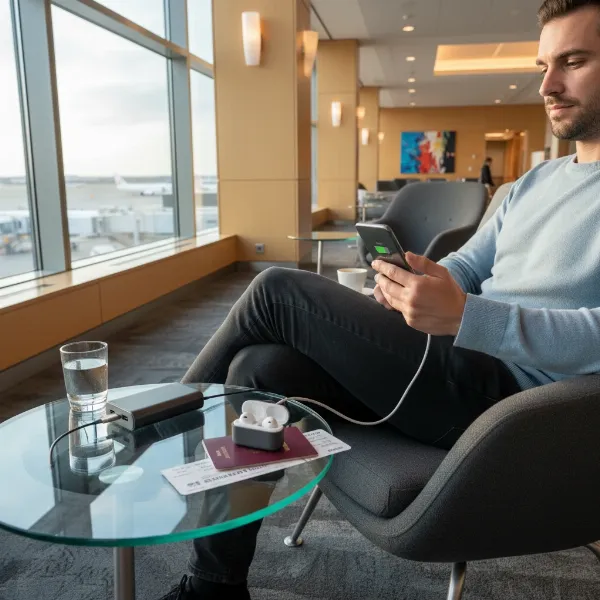
In our hyper-connected world, keeping devices charged on the go is no longer a luxury but a fundamental necessity. From navigating a long-haul flight to powering a remote campsite, the need for reliable portable energy is constant. This critical demand often leads to a pivotal choice between two popular solutions: the traditional power bank and the increasingly popular solar charger. While both offer the convenience of portable power, their mechanisms, capacities, and ideal applications differ significantly, making the decision dependent on your specific power needs and lifestyle.
Understanding Portable Power: Power Banks Explained
A power bank, also known as a portable charger or external battery, is essentially a compact, rechargeable battery unit that stores electrical energy. These devices typically house lithium-ion or lithium-polymer cells within a durable casing. Their operation is straightforward: you charge the power bank itself via a wall outlet or USB port, storing energy within its internal battery. Later, you connect your smartphone, tablet, laptop, or other electronic device to the power bank to transfer that stored energy, providing a quick and efficient recharge.
Power banks are a staple for daily commuters, travelers, and anyone needing a reliable energy boost away from traditional power outlets. They are lauded for their predictable and fast charging speeds, offering consistent performance regardless of external environmental factors. Available in various capacities, from pocket-sized models for a single phone charge to larger units capable of multiple device recharges or even powering a laptop, power banks are incredibly versatile.
Types of Power Banks
Power banks can be classified in several ways, catering to diverse needs:
- By Capacity (mAh/Wh): Ranging from small 5,000 mAh units (enough for roughly one full smartphone charge) to high-capacity 20,000 mAh or even 100,000 mAh models designed for multiple devices or longer durations.
- By Charging Technology: Many modern power banks feature fast-charging technologies like Quick Charge (QC) or Power Delivery (PD) via USB-C ports, significantly reducing device charging times. Some also offer wireless charging capabilities.
- By Features: Beyond basic charging, some power banks include integrated cables, LED flashlights, or rugged, water-resistant designs for outdoor use.
|
Our Picks for the Best Power bank in 2026
As an Amazon Associate I earn from qualifying purchases.
|
||
| Num | Product | Action |
|---|---|---|
| 1 | Anker Power Bank, 20,000mAh Travel Essential Portable Charger with Built-in USB-C Cable, 3-Port 87W Max Fast Charging Battery Pack, for MacBook, iPhone 16/15 Series, Samsung, Switch, and More |

|
| 2 | INIU Portable Charger, Ultra Slim 45W Fast Charging with Attached USB C Cable, Flight-Safe 10000mAh PD Power Bank Battery Pack, Travel Essential Phone Powerbank for iPhone 17 16 Samsung S25 Google etc |
|
| 3 | Anker Power Bank(PowerCore 10K), Compact Travel-Ready 10,000mAh Battery Pack with PowerIQ Charging Technology, 5V/3A High-Speed Charging for iPhone, iPad,and More (1, Black) |
|
| 4 | Anker 737 Power Bank, 140W Max 3-Port Laptop Portable Charger, 24,000mAh, Smart Display, Compatible with iPhone 16 / 15 / 14 Series, Vision Pro, Samsung, MacBook, and More |
|
| 5 | charmast Portable Charger with Built in Cables, Power Bank with Cords Wires, Slim 10000mAh Travel Battery Pack 6 Outputs 3 Inputs 5A Fast Charging for Samsung Google Pixel LG Moto iPhone iPad |
|
| 6 | UGREEN QI2 Power Bank, 8.6mm Ultra-Slim 5000mAh Magnetic Battery, 20W PD Fast Charging Portable Charger, MagSafe-Compatible External Battery for iPhone 17/16/15/14 Series, Blue |
|
| 7 | Anker MagGo Power Bank, Ultra-Slim 10,000mAh Magnetic Battery Pack, Qi2 Certified 15W Ultra-Fast MagSafe Compatible Portable Charger, Ergonomic Design, for iPhone17/16/15/14 Series Only(Not for Pixel) |
|
| 8 | Anker Prime Power Bank, 26,250mAh 3-Port Portable Charger with 300W Max Output, Two-Way Charging, TSA-Approved, App Control, for MacBook, iPhone 17/16 Series, and More (Base Not Included) |
|
| 9 | Anker Zolo Power Bank (2025 Upgraded Version), 20,000mAh 30W High-Speed Portable Charger with Built-in USB-C Cable, Battery Pack for iPhone 17/16 / 15 Series, Galaxy, and More |
|
| 10 | Portable Charger Power Bank, 60000mAh Battery Pack with 3 in 1 USB-C/iOS/Micro-USB Cable, 22.5W Fast Charging Portable Phone Charger, Travel Camping Essential Powerbank for iPhone 17/16 Samsung,Ebony |
|
Harnessing the Sun: Solar Chargers Demystified
Solar chargers are portable power solutions that convert sunlight into usable electricity. These devices employ photovoltaic (PV) cells, commonly known as solar panels, to capture solar energy and transform it into direct current (DC) electricity. This electricity can then be used to directly charge devices or, more commonly, to recharge an integrated battery pack for later use.
Solar chargers are particularly appealing for their eco-friendly nature, relying on a renewable energy source. They are a game-changer for off-grid scenarios, extended outdoor adventures, and emergencies where traditional power sources are scarce or non-existent.
How Solar Chargers Work
The core of a solar charger lies in its photovoltaic cells. When sunlight strikes these cells, it excites electrons within the silicon material, creating an electric current. This current flows through the charger’s circuitry. Many solar chargers incorporate a charge controller, which is crucial for optimizing power output and protecting connected batteries from overcharging or deep discharging, thereby enhancing efficiency and safety. The generated electricity can either flow directly to a device or be stored in an internal battery for use when the sun isn’t shining.
Types of Solar Chargers
Solar chargers come in various forms, each suited for different applications:
- Direct Portable Solar Panel Chargers: These consist of foldable panels with USB ports, allowing devices to be charged directly from the sun in real-time. They typically don’t include an internal battery.
- Solar Power Banks (Hybrid): These compact devices combine small solar panels with an internal battery. While they can slowly recharge via sunlight, the solar panel is often a supplementary feature, with wall charging being the primary and most efficient method for a full charge.
- Solar Generator Systems: Larger, more robust setups comprising separate, high-capacity portable power stations and one or more foldable solar panels. These systems are designed for serious off-grid power needs, capable of running larger appliances and tools.
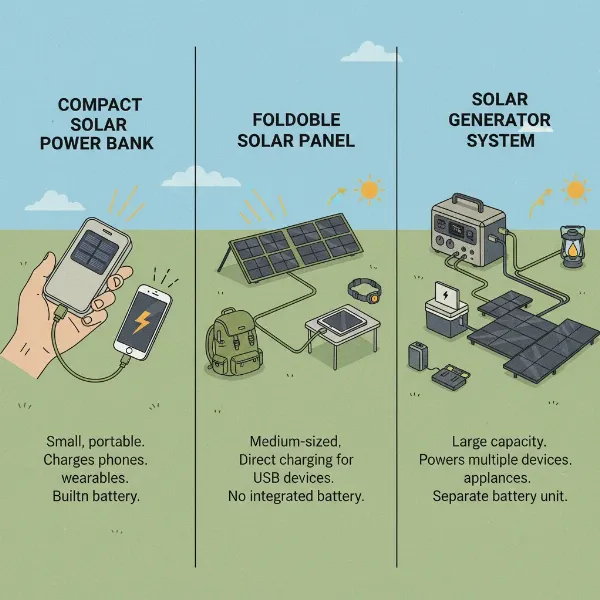 Different types of solar chargers including foldable panels and solar power banks with varying sizes and features
Power Bank vs. Solar Charger: A Head-to-Head Comparison
Choosing between a power bank and a solar charger largely depends on your specific needs, particularly your access to electricity and the environments in which you’ll require power.
Charging Speed and Efficiency
- Power Bank: Offers superior charging speed and reliability. Recharging a power bank from a wall outlet is fast and predictable, often taking just a few hours for a high-capacity unit. Output to devices is also consistently fast, with many supporting rapid charging technologies.
- Solar Charger: Charging speed is highly dependent on sunlight intensity, panel size, and efficiency. While larger, dedicated solar panels can offer decent charging speeds in peak sunlight, smaller integrated panels on solar power banks are notably slower, often taking days to fully charge a battery. Performance decreases significantly on cloudy days or in shaded areas.
Portability and Design
- Power Bank: Generally more compact and lighter, making them ideal for everyday carry, short trips, and situations where space and weight are critical. They are discreet and can easily fit into pockets, bags, or purses.
- Solar Charger: Can vary significantly in size. Small solar power banks are portable, but often thicker due to the integrated panel. Foldable solar panels can be larger and bulkier when deployed, although many are designed to be lightweight and attachable to backpacks, making them suitable for outdoor use. Solar generator systems are the least portable, designed for more static setups like basecamps or RVs.
Reliance and Versatility
- Power Bank: Extremely reliable as long as it has stored charge. It can be used anytime, anywhere, regardless of weather or light conditions. Ideal for indoor use, public transport, and short-term outdoor excursions.
- Solar Charger: Reliant on direct sunlight. This makes them less versatile in urban environments, at night, or during prolonged periods of overcast weather. However, for extended off-grid use, they offer unparalleled independence from traditional power sources. Hybrid solar power banks offer a compromise, allowing wall charging and supplemental solar charging.
Cost and Durability
- Power Bank: Typically more affordable upfront, especially for basic models. Prices increase with capacity and advanced features like fast charging. Quality brands are generally durable and built for everyday wear and tear.
- Solar Charger: Generally have a higher upfront cost due to the photovoltaic technology and robust designs often required for outdoor use. Small solar power banks are more affordable, but high-wattage foldable panels or solar generator systems can be a significant investment. Durability varies; while many are designed to be weather-resistant and rugged, solar panels themselves can be delicate and sensitive to extreme heat, which can degrade internal batteries if left exposed for extended periods.
Environmental Impact
- Power Bank: Relies on electricity from the grid for recharging. While you can choose to charge it with renewable energy if your grid source allows, the device itself doesn’t generate clean energy.
- Solar Charger: The clear winner for eco-consciousness. It harnesses limitless, renewable energy from the sun, significantly reducing your carbon footprint and promoting a more sustainable lifestyle.
Choosing Your Portable Power Companion: What to Consider
Deciding between a power bank and a solar charger (or even both) boils down to a careful assessment of your personal needs.
-
Your Primary Use Case:
- Daily Commute/Short Trips/Indoor Backup: A power bank is likely your best bet for quick, reliable charges.
- Multi-day Outdoor Adventures/Off-Grid Living/Emergencies: A dedicated solar charger or a solar generator system provides sustainable power independence.
- Combined Use (e.g., occasional camping but mostly daily use): A high-capacity power bank combined with a separate, foldable solar panel for recharging the power bank, or a hybrid solar power bank for emergency top-ups, might be ideal.
-
Charging Environment:
- Consistent Access to Wall Outlets: A power bank is highly efficient.
- Limited/No Access to Outlets, Abundant Sunlight: A solar charger shines here.
-
Devices You Need to Charge:
- Smartphones, Tablets, Small Gadgets: Most power banks and smaller solar chargers can handle these.
- Laptops, Drones, Larger Appliances: You’ll need a high-capacity power bank with AC output or a robust solar generator system.
-
Budget and Brand Reputation:
- Determine how much you’re willing to invest. While power banks are cheaper, the long-term energy independence of solar might justify a higher initial cost for some. Always prioritize reputable brands known for safety and performance.
 A decision tree or flowchart guiding a user through choosing between a power bank and a solar charger based on their needs
Top Brands for Portable Power Solutions
While the market is flooded with options, certain brands consistently deliver quality and innovation in both power banks and solar chargers.
Power Bank Brands
- Anker: Widely recognized for reliability, fast-charging technology, and durable products across various capacities.
- Xiaomi: Offers competitive pricing with sleek designs and good performance, particularly in mid-range capacities.
- Nitecore: Popular among outdoor enthusiasts for ultralight and rugged power banks.
- BioLite: Known for durable power banks and innovative outdoor charging solutions.
Solar Charger Brands
- Goal Zero: A leader in portable power, offering robust solar panels and power stations ideal for camping and emergencies.
- BigBlue: Known for efficient and portable foldable solar panels.
- Anker (select models): Also produces high-quality solar chargers and solar power banks.
- Jackery/Bluetti: Specializes in larger solar generators and portable power stations, often paired with their own solar panels.
Detailed Comparison Table
| Feature | Standard Power Bank | Solar Charger (Standalone Panels) | Hybrid Solar Power Bank |
|---|---|---|---|
| Primary Recharge Method | Wall outlet, USB ports | Direct sunlight | Wall outlet, supplementary sunlight |
| Charging Speed (Self) | Fast (2-8 hours for full charge) | Slow (hours to days depending on sun) | Moderate (wall), Very slow (solar) |
| Charging Speed (Device) | Fast, consistent | Variable, dependent on sun | Fast (from battery), Variable (from sun) |
| Portability | Very high (compact, lightweight) | Moderate (foldable, can be bulky) | High (similar to power bank, thicker) |
| Reliability | High (always ready if charged) | Low (needs sun, weather-dependent) | High (wall charged), Moderate (solar backup) |
| Best Use Cases | Daily use, short travel, indoor backup | Extended off-grid, camping, emergencies | Emergency backup, trickle charge during day |
| Environmental Impact | Indirect (depends on grid source) | High (clean, renewable energy) | Moderate (can use solar, but often grid) |
| Upfront Cost | Low to Medium | Medium to High | Medium |
| Durability | Generally good, robust models available | Often rugged, panels sensitive to damage | Can overheat in direct sun if left long |
Using and Maintaining Your Portable Charger
Regardless of your choice, proper usage and maintenance can significantly extend the lifespan and efficiency of your device.
Power Bank Tips
- Charge Correctly: Use the recommended charger and cable. Avoid overcharging by unplugging once full, though most modern power banks have protection circuits.
- Store Properly: Keep your power bank in a cool, dry place, away from extreme temperatures. Store it with about a 50-70% charge if not using it for an extended period.
- Avoid Physical Damage: Protect it from drops, impacts, and water, especially if it’s not a ruggedized model.
- Monitor Battery Health: If you notice swelling, excessive heat, or significantly reduced capacity, discontinue use.
Solar Charger Tips
- Maximize Sunlight Exposure: Angle solar panels directly towards the sun for optimal efficiency. Adjust throughout the day.
- Keep Panels Clean: Dust and dirt can reduce efficiency. Gently wipe panels with a soft, damp cloth.
- Protect from Overheating (for solar power banks): While solar charging requires sun, leaving hybrid solar power banks in direct, intense sunlight for prolonged periods can overheat the internal battery, potentially causing damage. Prioritize wall charging for a full charge.
- Store in a Dry Place: Protect panels and batteries from moisture when not in use.
- Use with a Battery Pack: For standalone solar panels, connecting them to a dedicated portable battery pack allows you to store energy collected during the day for use at night or on cloudy days.
Common Issues and How to Resolve Them
Even the most reliable portable chargers can encounter problems.
Power Bank Not Charging/Charging Slowly
- Check Cables and Adapters: Ensure all connections are secure and that the cables/adapters are not damaged and are rated for the correct power output.
- Restart Device: Disconnect and reconnect your devices/power bank.
- Clean Ports: Dust or debris in USB ports can prevent proper connection.
- Overheating: If the power bank is hot, let it cool down before attempting to charge again.
Solar Charger Not Charging/Charging Slowly
- Sunlight Conditions: Ensure direct, unobstructed sunlight. Cloudy weather or shade will severely reduce charging efficiency.
- Panel Angle: Re-angle the solar panel to face the sun directly.
- Clean Panels: Wipe away any dirt or obstructions on the solar cells.
- Device Compatibility: Ensure your device is compatible with the solar charger’s output. Some devices require specific voltage/amperage.
- Internal Battery Issues (for solar power banks): If the internal battery is old or damaged, its ability to hold a charge from solar may be compromised.
Buying Guide: Making an Informed Choice
Navigating the options for portable power can be overwhelming, but a systematic approach ensures you find the perfect match.
-
Determine Your Core Power Needs:
- What devices do you typically need to charge (smartphone, tablet, laptop, camera, drone)?
- How many times do you need to charge them before replenishing your portable power source? This will guide your capacity requirements (mAh for power banks, Watts for solar panels).
- Do you require fast charging capabilities (e.g., Power Delivery for laptops)?
-
Evaluate Your Charging Environment and Frequency:
- Will you primarily be near wall outlets, or venturing into areas without grid access?
- How often do you anticipate needing portable power? Daily, weekly, or only for specific trips?
- What are the typical weather conditions in your outdoor environments (sunny, cloudy)?
-
Consider Portability and Durability:
- How important is size and weight? For ultralight backpacking, every ounce counts.
- Do you need a rugged, water-resistant, or shockproof device for demanding outdoor conditions?
-
Research Brands and Read Reviews:
- Stick to established, reputable brands known for product safety and customer support.
- Look for independent reviews and real-world performance tests, especially for charging speeds and actual capacity.
-
Prioritize Safety Features:
- For any battery-based device, ensure it has built-in protections against overcharging, over-discharging, short circuits, and overheating. This is crucial for both device and user safety.
- Avoid generic, unbranded products with suspiciously low prices.
-
Check Specifications:
- Capacity: (mAh/Wh) for power banks and integrated batteries.
- Output Ports: USB-A, USB-C (with PD), wireless charging.
- Input Power: How the device itself is charged (e.g., 18W USB-C input for fast power bank recharge, or 50W solar input).
- Solar Panel Wattage/Efficiency: For solar chargers, higher wattage usually means faster charging. MPPT controllers offer better efficiency.
-
Purchase from Reputable Retailers:
- Buy from authorized dealers to ensure genuine products and valid warranties. This also facilitates easier returns or exchanges if needed.
Conclusion
The choice between a power bank and a solar charger ultimately hinges on your specific lifestyle and power requirements. For the convenience of quick, reliable charging in urban settings or short trips, a traditional power bank remains an unrivaled companion. Its consistent performance and portability make it an essential everyday carry item. However, for those who embrace the wilderness, seek energy independence, or prioritize sustainable power during extended off-grid adventures, a solar charger, particularly one paired with a robust battery system, provides an invaluable, eco-friendly solution. Many find that a combination of both—a dependable power bank for daily use and a dedicated solar panel for recharging it during longer outdoor excursions—offers the ultimate in portable power versatility. Which portable power solution will you choose to keep your adventures, big or small, always powered?
Frequently Asked Questions
Can a small solar power bank fully charge a smartphone?
While a small hybrid solar power bank can charge a smartphone, it often does so very slowly. The small integrated solar panels are typically designed for trickle charging or emergency top-ups, not for a rapid full charge, which may take many hours or even days of direct sunlight.
Are power banks safe to take on airplanes?
Yes, most power banks are safe to take on airplanes, but they must be carried in your carry-on luggage, not checked baggage. There are usually capacity limits (e.g., under 100Wh is generally fine, 100-160Wh requires airline approval, over 160Wh is typically forbidden). Always check with your airline’s specific regulations before flying.
How long do portable power banks last?
The lifespan of a portable power bank is generally measured in charge cycles, typically ranging from 300 to 1,000 cycles. With proper care and usage, a good quality power bank can last several years before its capacity significantly degrades.
Can solar chargers work on cloudy days?
Solar chargers can still generate some electricity on cloudy days, but their efficiency will be significantly reduced. They will not perform at their maximum capacity, and charging times will be much longer, potentially making them impractical for anything more than a slow trickle charge.
What is the ideal capacity for a travel power bank?
For most travelers, a power bank with a capacity of 10,000 mAh to 20,000 mAh strikes a good balance between portability and multiple charges. 10,000 mAh is usually enough for 2-3 smartphone charges, while 20,000 mAh can provide 4-6 charges or power a tablet.