In an increasingly connected world, the dread of a dying phone battery is a universal experience. Whether you’re navigating a busy commute, embarking on a cross-country road trip, or simply enjoying a day out, keeping your devices powered is paramount. Two primary contenders often come to mind for on-the-go charging: the versatile power bank and the ever-present car charger. While both promise to banish battery anxiety, they offer distinct advantages and cater to different lifestyles. This article will delve into the intricacies of each, comparing their features, benefits, and drawbacks, to help you determine which solution best suits your specific charging needs.
Understanding Power Banks: Your Pocket-Sized Powerhouse
A power bank, often referred to as a portable charger, is essentially a compact, external battery that stores electrical energy and dispenses it to charge your electronic devices when you’re away from a wall outlet. Their evolution has paralleled the rise of smartphones and other portable gadgets, quickly transitioning from a niche accessory to an indispensable item for anyone reliant on battery-powered tech. In modern life, where devices are central to communication, navigation, and entertainment, a reliable power bank offers crucial energy independence.
Power banks operate by housing rechargeable lithium-ion or lithium-polymer batteries internally. You charge the power bank itself from a standard wall outlet, and it stores this energy. When your device needs a boost, you simply connect it to the power bank via a USB cable, and the stored energy is transferred. Many contemporary power banks also boast advanced features like wireless charging capabilities and multiple output ports, allowing you to power several devices simultaneously. This self-contained energy source is the fundamental difference that grants power banks their unparalleled portability and versatility.
Common Power Bank Types and Features
Power banks come in a vast array of designs, capacities, and functionalities, making them adaptable to almost any charging scenario.
- Capacity (mAh): This is arguably the most critical specification, measured in milliampere-hours (mAh). Small power banks (e.g., 5,000 mAh) are ideal for a single phone charge or emergency top-ups. Medium capacity units (10,000-20,000 mAh) can charge smartphones multiple times or handle tablets. High-capacity power banks (20,000 mAh+) are designed for heavy users, multiple devices, or even laptops, offering sustained power for extended periods away from outlets.
- Charging Technology: Modern power banks often incorporate fast-charging protocols like Quick Charge (QC) or Power Delivery (PD). These technologies allow compatible devices to charge significantly faster than standard USB charging, drastically reducing downtime. Power Delivery (PD) is particularly important for charging larger devices like laptops via USB-C.
- Connectivity: Most power banks feature multiple USB-A and/or USB-C output ports. Some models also integrate cables directly or offer wireless charging pads, enhancing convenience and reducing the need for extra cables.
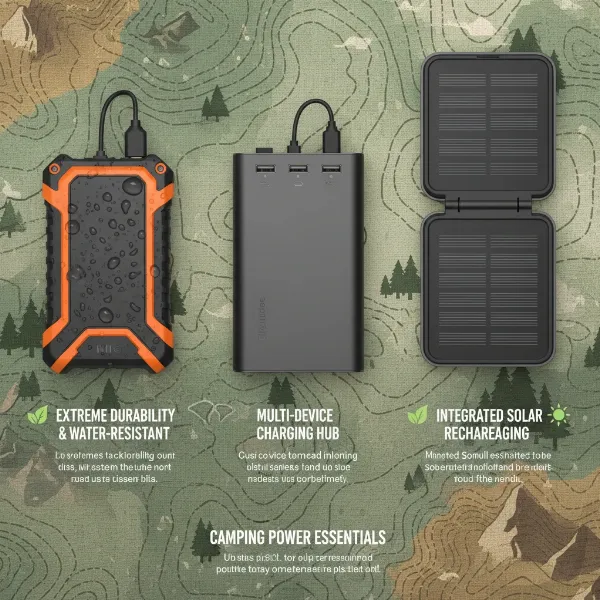
- Additional Features: Beyond core charging, some power banks include integrated flashlights, ruggedized designs for outdoor use, or even solar panels for emergency recharging in remote areas.
|
Our Picks for the Best Power bank in 2026
As an Amazon Associate I earn from qualifying purchases.
|
||
| Num | Product | Action |
|---|---|---|
| 1 | Anker MagGo Power Bank, Ultra-Slim 10,000mAh Magnetic Battery Pack, Qi2 Certified 15W Ultra-Fast MagSafe Compatible Portable Charger, Ergonomic Design, for iPhone17/16/15/14 Series Only(Not for Pixel) |

|
| 2 | Anker 737 Power Bank, 140W Max 3-Port Laptop Portable Charger, 24,000mAh, Smart Display, Compatible with iPhone 16 / 15 / 14 Series, Vision Pro, Samsung, MacBook, and More |
|
| 3 | Anker Power Bank(PowerCore 10K), Compact Travel-Ready 10,000mAh Battery Pack with PowerIQ Charging Technology, 5V/3A High-Speed Charging for iPhone, iPad,and More (1, Black) |
|
| 4 | Anker Zolo Power Bank (2025 Upgraded Version), 20,000mAh 30W High-Speed Portable Charger with Built-in USB-C Cable, Battery Pack for iPhone 17/16 / 15 Series, Galaxy, and More |
|
| 5 | Anker Power Bank, 20,000mAh Travel Essential Portable Charger with Built-in USB-C Cable, 3-Port 87W Max Fast Charging Battery Pack, for MacBook, iPhone 16/15 Series, Samsung, Switch, and More |
|
| 6 | Portable Charger Power Bank, 60000mAh Battery Pack with 3 in 1 USB-C/iOS/Micro-USB Cable, 22.5W Fast Charging Portable Phone Charger, Travel Camping Essential Powerbank for iPhone 17/16 Samsung,Ebony |
|
| 7 | INIU Portable Charger, Ultra Slim 45W Fast Charging with Attached USB C Cable, Flight-Safe 10000mAh PD Power Bank Battery Pack, Travel Essential Phone Powerbank for iPhone 17 16 Samsung S25 Google etc |
|
| 8 | Anker Prime Power Bank, 26,250mAh 3-Port Portable Charger with 300W Max Output, Two-Way Charging, TSA-Approved, App Control, for MacBook, iPhone 17/16 Series, and More (Base Not Included) |
|
| 9 | UGREEN QI2 Power Bank, 8.6mm Ultra-Slim 5000mAh Magnetic Battery, 20W PD Fast Charging Portable Charger, MagSafe-Compatible External Battery for iPhone 17/16/15/14 Series, Blue |
|
| 10 | charmast Portable Charger with Built in Cables, Power Bank with Cords Wires, Slim 10000mAh Travel Battery Pack 6 Outputs 3 Inputs 5A Fast Charging for Samsung Google Pixel LG Moto iPhone iPad |
|
[image-1|power-bank-types-features|A collage showing different types of power banks, highlighting various capacities and charging technologies.|
A vibrant, illustrative collage of various power bank types: a slim, compact power bank for everyday carry, a larger, rugged outdoor power bank with a flashlight, and a sleek power bank demonstrating wireless charging. The background is a gradient of blue and green, suggesting versatility and energy, with subtle tech-inspired patterns. Top-down view, clean, editorial style.]
Essential Guidelines for Choosing a Power Bank
Selecting the right power bank requires careful consideration of your individual needs and habits.
-
Assess Your Usage Needs:
- Devices: What devices will you be charging? (smartphone, tablet, laptop, smartwatch, headphones)
- Frequency: How often do you need to charge on the go?
- Duration: How long will you be away from traditional power sources?
- Capacity Calculation: As a rough guide, a power bank should ideally have at least 1.5 to 2 times the mAh capacity of your primary device’s battery for reliable single charging. For multiple charges or devices, opt for higher capacities.
-
Match Charging Technology: If your devices support fast charging (e.g., USB-PD, Quick Charge), ensure your chosen power bank also supports these protocols to maximize charging speed and efficiency.
-
Prioritize Safety Features: A reputable power bank will include built-in safeguards such as overcharge protection, over-discharge protection, short-circuit protection, and temperature control. These features are crucial for protecting both your devices and the power bank itself.
-
Consider Portability and Design: High-capacity power banks can be heavier and bulkier. Balance your need for power with the desire for a compact, easy-to-carry device. Look for durable construction if you plan to use it in rugged environments.
-
Brand Reputation and Warranty: Opt for power banks from established brands known for quality and reliability. Check the warranty policy for peace of mind.
Exploring Car Chargers: Your On-Road Power Solution
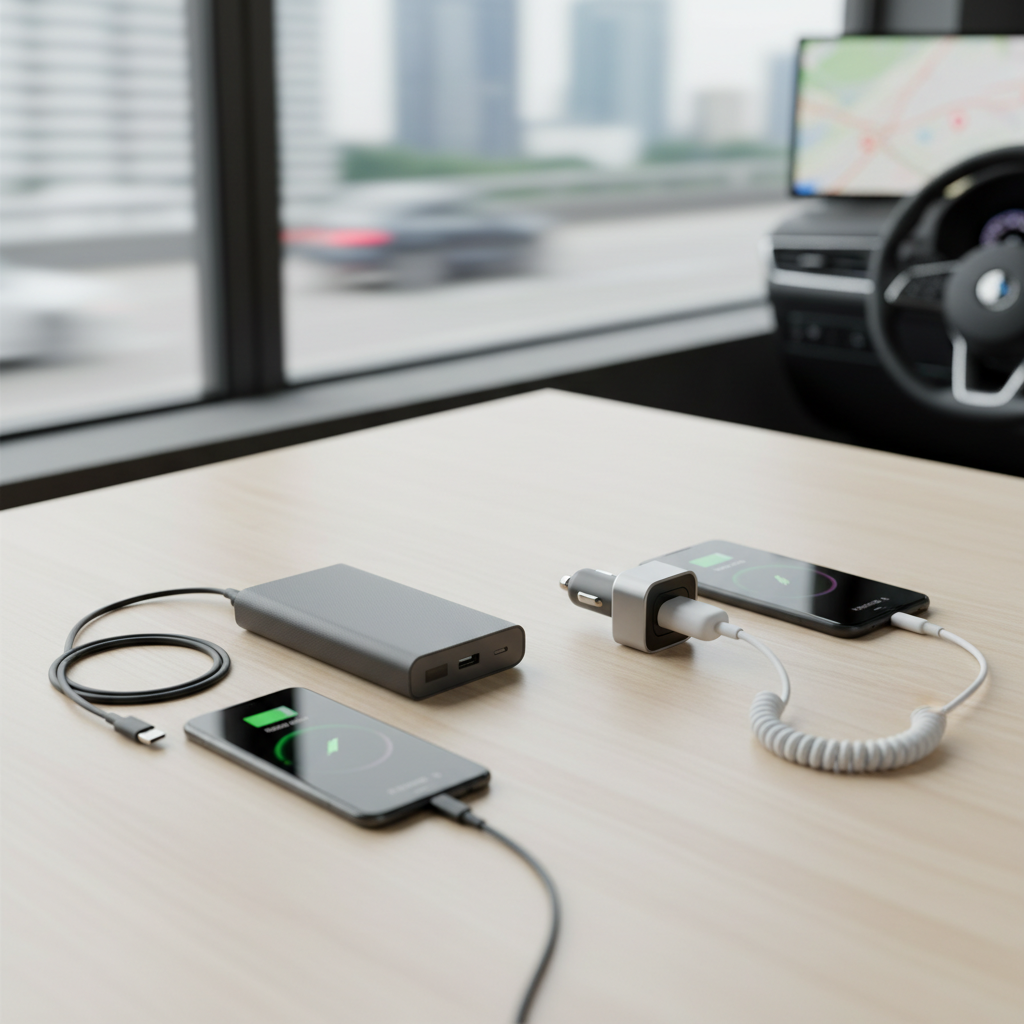
Car chargers are devices specifically engineered to recharge your electronic gadgets while you are operating or occupying your vehicle. They typically plug into your car’s 12V cigarette lighter socket or an auxiliary power outlet, drawing power directly from the vehicle’s electrical system. These compact and user-friendly adapters usually feature one or more USB ports, enabling you to charge smartphones, tablets, and other USB-powered devices.
The fundamental principle behind a car charger involves tapping into the car’s battery and alternator system. When plugged into the accessory port, the charger converts the car battery’s 12-volt DC power into the lower voltage (typically 5V) and appropriate amperage (measured in amps) required by mobile devices. Modern car chargers are designed to be sturdy and user-friendly, allowing for convenient power access during commutes, road trips, or when working from your vehicle. They offer an ‘always available’ charging solution as long as your car is running or its accessory port is active.
[image-2|car-charger-types-features|A modern car charger plugged into a car’s cigarette lighter, showing multiple USB ports and an illuminated indicator.|
A close-up, realistic shot of a sleek, black car charger plugged into a car’s 12V cigarette lighter socket. The charger has multiple illuminated USB ports (one USB-A, one USB-C) with a soft blue glow. The car’s dashboard is softly blurred in the background, with warm interior lighting. Low angle, focus on the device.]
Varieties of Car Chargers
While the basic function remains consistent, car chargers come with various features that enhance their utility:
- Single vs. Multiple Ports: Basic car chargers offer a single USB port, while many popular models provide dual or even triple ports, allowing you to charge several devices simultaneously, which is highly beneficial for families or those with multiple gadgets.
- Fast Charging Technologies: Similar to power banks, many car chargers now support fast-charging standards like Quick Charge (QC) and Power Delivery (PD) over USB-C. This means you can rapidly charge compatible phones and tablets, even during short drives.
- Voltage Display: Some advanced car chargers include a small LED screen that displays the car battery’s voltage, offering a convenient way to monitor your vehicle’s electrical health.
- Smart Charging: Certain chargers feature intelligent chipsets that automatically detect the connected device’s charging requirements and deliver the optimal current, preventing overcharging and ensuring efficient power delivery.
How to Select an Optimal Car Charger
Choosing a car charger is generally simpler than a power bank, but a few considerations ensure safety and efficiency:
- Check Output Current (Amperage): Look for car chargers that offer at least 2.4A (amps) per port for standard charging. For fast charging, ensure it supports QC or PD with higher amperage and wattage ratings that match your devices.
- Number of Ports: If you frequently charge multiple devices or travel with others, a multi-port charger is a must-have.
- Safety Certifications: It’s crucial to select a car charger from a reputable manufacturer. Cheap, unbranded chargers may lack essential protection circuits, potentially exposing your devices to voltage spikes from the car’s electrical system. Look for chargers with certifications for overcurrent, overvoltage, and short-circuit protection.
- Build Quality: Given the vibrations and temperature fluctuations in a car, a durable charger with solid construction is advisable.
Power Bank vs Car Charger: A Head-to-Head Battle
Deciding between a power bank and a car charger boils down to your typical charging environment and priorities. Here’s a direct comparison:
| Feature | Power Bank | Car Charger |
|---|---|---|
| Portability | High – designed to be carried anywhere. | Low – tied to the vehicle for power. |
| Power Source | Internal, rechargeable battery. | Car’s electrical system (battery/alternator). |
| Usage Location | Anywhere, independent of external power. | Primarily inside or near the car. |
| Charging Speed | Varies; many offer fast charging (QC/PD). | Varies; can be slower than power banks/wall chargers in some conditions, but modern ones support fast charging. |
| Cost | Moderate to High, depending on capacity/features. | Low to Moderate. |
| Availability | Always available as long as it’s charged. | Only available when the car is accessible and running (or accessory port is active). |
| Safety | Provides steady power source, generally safer with proper protection circuits. | Can be prone to voltage transients from car’s electrical system; requires good protection circuits for device safety. |
| Primary Benefit | Unrestricted mobile power for diverse scenarios. | Convenient, continuous power during travel. |
Using and Maintaining Your Portable Power Solutions
Proper usage and maintenance are key to extending the lifespan and ensuring the safe operation of both power banks and car chargers.
Power Bank Usage and Maintenance Tips
- Optimal Charging Levels: For lithium-ion batteries, it’s generally best not to let the power bank fully discharge or remain at 100% charge for extended periods when stored. Aim to keep it between 20% and 80% charge for long-term storage.
- Avoid Extreme Temperatures: High heat, humidity, and direct sunlight are detrimental to battery health and can even pose a safety hazard. Avoid leaving your power bank in a hot car or in direct sun.
- Charge Regularly (Even in Storage): If you store a power bank for an extended time, recharge it periodically (every 2-3 months) to about 50-70% to prevent deep discharge, which can damage the battery.
- Use Quality Cables: Always use the original or high-quality charging cables to ensure efficient and safe power transfer.
- Handle with Care: Avoid dropping or subjecting your power bank to physical shocks, as this can damage internal components.
- Keep Clean: Regularly clean the charging ports with a dry cotton swab or compressed air to prevent debris from hindering connections.
- Unplug When Charged: While most modern power banks have overcharge protection, it’s good practice to unplug them once they are fully charged to minimize stress on the battery.
“The longevity of your power bank is directly tied to how well you treat its battery. Avoiding extreme temperatures and maintaining a moderate charge level are simple habits that yield significant results.” – Dr. Elena Petrova, Battery Technology Specialist
Car Charger Best Practices
- Plug into the Correct Port: Ensure the car charger is securely inserted into the 12V auxiliary power outlet.
- Match Output to Device: While many chargers are “smart,” always verify that the charger’s output capabilities align with your device’s requirements for optimal speed and safety.
- Avoid Overloading: If your car charger has multiple ports, be mindful of the total output. While most modern chargers manage this, extremely cheap models might struggle when all ports are in use.
- Unplug When Not in Use: Though most car chargers draw minimal power when idle, unplugging them when the car is off can prevent unnecessary drain on your car’s battery, especially in older vehicles.
- Monitor for Overheating: While slight warmth is normal, if a car charger becomes excessively hot, unplug it immediately. This could indicate a fault with the charger or the car’s electrical system.
- Keep Ports Clean: Dust and debris can accumulate in the car’s 12V socket or the charger’s USB ports, affecting connectivity.
Common Problems and Troubleshooting
- Device not charging:
- Power Bank: Check if the power bank itself is charged. Try a different cable or USB port. Ensure the device is compatible.
- Car Charger: Ensure the car’s ignition is on (or accessory power is active). Check the car’s fuse for the 12V socket. Try a different cable or car charger.
- Slow Charging:
- Both: Use a fast-charging compatible cable. Ensure both the charger (power bank or car charger) and your device support the same fast-charging protocol (QC, PD). Close background apps on your device.
- Overheating:
- Both: Unplug immediately. This can indicate a faulty unit or excessive load. Ensure the environment isn’t too hot (e.g., direct sunlight). For power banks, ensure ventilation isn’t blocked. If it persists, replace the charger for safety.
Buying Guide: Making Your Choice
When deciding between a power bank and a car charger, or considering having both, here’s a structured approach:
1. Determine Your Primary Charging Environment
- Mostly in the Car? If your charging needs are almost exclusively confined to your daily commute, road trips, or during long waits in your vehicle, a reliable, fast-charging car charger is your most practical and cost-effective solution. It offers continuous power without needing to be pre-charged.
- Frequent Off-Grid Charging? For activities like hiking, camping, long flights, extended public transit, or simply being away from outlets for prolonged periods, a power bank is indispensable. It provides true mobile freedom.
2. Assess Your Portability Requirements
- Ultimate Portability: A power bank excels here. Smaller models can fit in a pocket, offering power truly anywhere.
- Car-Bound Convenience: A car charger is perfectly portable within the confines of your vehicle, but its utility ends when you step out of the car.
3. Evaluate Power Output and Speed Needs
- Fast Charging Essential: Both modern power banks and car chargers offer fast charging. Ensure the model you choose supports technologies like USB Power Delivery (PD) or Quick Charge (QC) if your devices are compatible and you need rapid recharges.
- Charging Laptops/Multiple Devices: For power-hungry devices like laptops or charging several gadgets at once, look for a high-capacity power bank with sufficient wattage output (e.g., 45W or 60W USB-C PD). Multi-port car chargers can also handle multiple phones, but may struggle with laptops without a dedicated AC inverter.
4. Consider Safety and Reliability
- Reputable Brands: Regardless of choice, always opt for products from well-known brands. This significantly increases the likelihood of robust internal safety features (overcharge, short-circuit, temperature protection).
- Car Electrical System: For car chargers, a quality product is paramount to protect your devices from potential voltage fluctuations inherent in a vehicle’s electrical system.
5. Budget and Value
- Cost-Effectiveness for Car Use: A good car charger is generally less expensive than a high-capacity power bank.
- Investment in Versatility: A power bank, while potentially a higher initial investment, offers unmatched versatility and freedom from power outlets.
Ultimately, for many people, the ideal solution is to have both. A robust car charger ensures your devices stay topped up during vehicle travel, while a well-chosen power bank provides a crucial backup for situations where your car isn’t an option, or when you simply need power far from any outlet.
Conclusion
The choice between a power bank and a car charger isn’t about one being definitively “better” than the other; rather, it’s about identifying the best fit for your specific lifestyle and charging scenarios. Power banks offer unparalleled freedom and flexibility, allowing you to power your devices truly anywhere, making them perfect companions for travel, outdoor adventures, or long days away from home. Car chargers, on the other hand, provide consistent and convenient power whenever you’re on the road, ensuring your gadgets stay charged throughout commutes and road trips.
For optimal preparedness, many find that a combination of both devices provides the most comprehensive solution, addressing diverse charging needs effectively. By understanding their individual strengths and weaknesses, you can make an informed decision that keeps your essential devices powered and ready for whatever life throws your way. Which charging companion will become your go-to for uninterrupted connectivity?
Frequently Asked Questions
Can a power bank jump-start a car?
No, a standard power bank designed for phones and small electronics cannot jump-start a car. Jump starters are specialized devices built to deliver the high, instantaneous current needed to ignite a car engine, which a power bank is not equipped to do.
Is it safe to leave a phone plugged into a car charger for a long time?
Modern car chargers and phones have built-in protection against overcharging. However, prolonged charging, especially with cheaper chargers, can generate excess heat. It’s generally safe, but if the charger or phone gets excessively hot, it’s best to unplug it.
Do car chargers drain my car’s battery?
A quality car charger draws minimal power when idle. However, if left plugged into an older vehicle with an always-on 12V socket, it could slowly drain the car battery over a very long period, especially if the car battery is already weak. It’s best to unplug it when the car is off for extended periods.
Can I use any USB cable with both power banks and car chargers?
While any USB cable might fit, using high-quality, manufacturer-recommended cables or those certified for fast charging is crucial. Poor quality or damaged cables can lead to slow charging, overheating, or even damage to your devices.
How do I know if my power bank or car charger is fast charging?
Look for indicators like “PD” (Power Delivery) or “QC” (Quick Charge) labels on the device or its packaging. Also, check the output specifications; fast chargers typically offer higher voltage (e.g., 9V, 12V) and/or amperage (e.g., 2A, 3A, or more).
What capacity power bank is best for a weekend trip?
For a weekend trip, a power bank with 10,000 mAh to 20,000 mAh is generally recommended. This capacity should be sufficient to charge a smartphone several times or handle a mix of devices like a phone, earbuds, and a smartwatch.
Why does my power bank sometimes get warm when charging?
It’s normal for power banks to get slightly warm during charging or discharging, as energy conversion generates some heat. However, if it becomes excessively hot to the touch, unplug it immediately, as this could indicate an internal fault or issue.