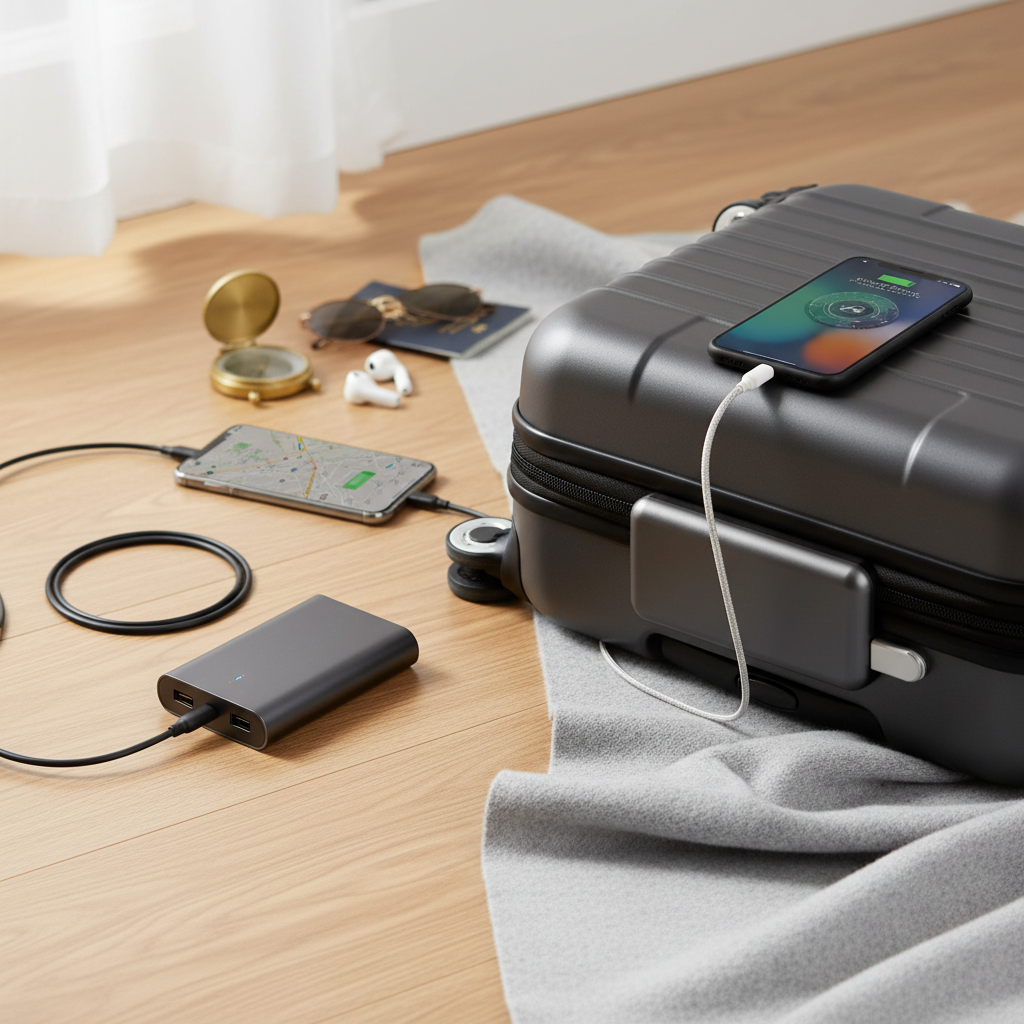
In our hyper-connected world, a dead device can feel like a genuine emergency, especially when traveling. From navigating unfamiliar cities with GPS to capturing unforgettable moments with your camera, staying powered is non-negotiable. This pressing need has led to a dilemma for modern travelers: should you rely on a trusty standalone power bank, or embrace the integrated convenience of smart luggage? Both promise to keep your gadgets alive, but a closer look at their features, regulations, and real-world applicability reveals a true buying test that goes beyond just charging.
Power Banks: The Versatile Portable Powerhouse
A power bank, often called a portable charger or external battery, is essentially a compact, rechargeable battery designed to store electrical energy and deliver it to your electronic devices on the go. What started as simple battery packs for phones has evolved into sophisticated devices capable of charging laptops, tablets, and multiple gadgets simultaneously. Their journey from niche accessory to everyday essential underscores their critical role in our mobile-first lives, providing a lifeline when wall outlets are scarce.
Types of Power Banks
Power banks come in various forms, each tailored to different needs and travel styles. Understanding these distinctions is key to making an informed choice.
- Capacity (mAh/Wh): This is perhaps the most crucial specification. Measured in milliampere-hours (mAh) or Watt-hours (Wh), it indicates how much energy a power bank can store.
- 10,000mAh: Ideal for light users, offering 2-3 smartphone charges. These are typically compact and lightweight.
- 20,000mAh: A sweet spot for most travelers, providing 4-5 smartphone charges or a partial tablet charge. Many models in this range are still airline-approved.
- 25,000mAh+ (and 100W+ output): Designed for charging laptops and multiple devices, these offer substantial power but require careful consideration of airline regulations regarding Watt-hours.
- Charging Technologies: Modern power banks feature advanced charging protocols for faster and more efficient power delivery.
- Quick Charge (QC): Developed by Qualcomm, it allows compatible devices to charge significantly faster than conventional charging.
- Power Delivery (PD): A universal fast-charging standard, especially prevalent with USB-C, that can deliver higher power outputs, making it suitable for larger devices like laptops.
- USB-C: Increasingly becoming the standard for both input and output, offering faster charging speeds and reversible connectors.
- Special Features: Beyond basic charging, some power banks offer added conveniences.
- Wireless Charging (Qi): For phones supporting the Qi standard, simply placing the device on the power bank initiates charging, eliminating the need for cables. While convenient, it’s often slower than wired charging.
- Solar-Powered: Equipped with small solar panels, these are great for off-grid adventures, though solar charging is typically very slow and serves best as a backup.
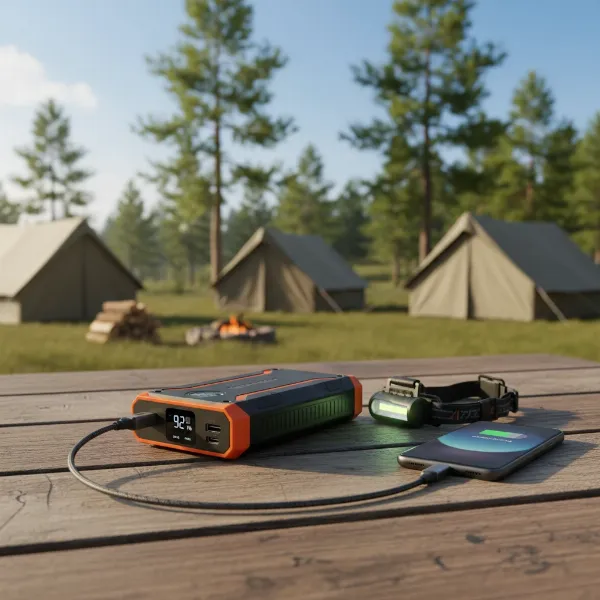
- Rugged Designs: Some power banks are built to withstand drops, water, and dust, making them ideal for outdoor enthusiasts.
|
Our Picks for the Best Power bank in 2026
As an Amazon Associate I earn from qualifying purchases.
|
||
| Num | Product | Action |
|---|---|---|
| 1 | Anker Zolo Power Bank (2025 Upgraded Version), 20,000mAh 30W High-Speed Portable Charger with Built-in USB-C Cable, Battery Pack for iPhone 17/16 / 15 Series, Galaxy, and More |

|
| 2 | Portable Charger Power Bank, 60000mAh Battery Pack with 3 in 1 USB-C/iOS/Micro-USB Cable, 22.5W Fast Charging Portable Phone Charger, Travel Camping Essential Powerbank for iPhone 17/16 Samsung,Ebony |
|
| 3 | Anker 737 Power Bank, 140W Max 3-Port Laptop Portable Charger, 24,000mAh, Smart Display, Compatible with iPhone 16 / 15 / 14 Series, Vision Pro, Samsung, MacBook, and More |
|
| 4 | charmast Portable Charger with Built in Cables, Power Bank with Cords Wires, Slim 10000mAh Travel Battery Pack 6 Outputs 3 Inputs 5A Fast Charging for Samsung Google Pixel LG Moto iPhone iPad |
|
| 5 | Anker Prime Power Bank, 26,250mAh 3-Port Portable Charger with 300W Max Output, Two-Way Charging, TSA-Approved, App Control, for MacBook, iPhone 17/16 Series, and More (Base Not Included) |
|
| 6 | UGREEN QI2 Power Bank, 8.6mm Ultra-Slim 5000mAh Magnetic Battery, 20W PD Fast Charging Portable Charger, MagSafe-Compatible External Battery for iPhone 17/16/15/14 Series, Blue |
|
| 7 | INIU Portable Charger, Ultra Slim 45W Fast Charging with Attached USB C Cable, Flight-Safe 10000mAh PD Power Bank Battery Pack, Travel Essential Phone Powerbank for iPhone 17 16 Samsung S25 Google etc |
|
| 8 | Anker MagGo Power Bank, Ultra-Slim 10,000mAh Magnetic Battery Pack, Qi2 Certified 15W Ultra-Fast MagSafe Compatible Portable Charger, Ergonomic Design, for iPhone17/16/15/14 Series Only(Not for Pixel) |
|
| 9 | Anker Power Bank, 20,000mAh Travel Essential Portable Charger with Built-in USB-C Cable, 3-Port 87W Max Fast Charging Battery Pack, for MacBook, iPhone 16/15 Series, Samsung, Switch, and More |
|
| 10 | Anker Power Bank(PowerCore 10K), Compact Travel-Ready 10,000mAh Battery Pack with PowerIQ Charging Technology, 5V/3A High-Speed Charging for iPhone, iPad,and More (1, Black) |
|
How to Choose the Right Power Bank
Selecting the perfect power bank involves a thoughtful assessment of your specific requirements and an understanding of key technical aspects.
First, identify your usage needs. Consider which devices you’ll be charging (smartphone, tablet, laptop, earbuds, smartwatch) and how many full charges you anticipate needing between access to a wall outlet. For just a phone, a 10,000mAh unit might suffice, but for multiple devices or longer trips, 20,000mAh or more is advisable.
Next, delve into the technical specifications. Look at the Watt-hour (Wh) rating, not just mAh, as Wh is the primary metric for airline regulations. Ensure the power bank offers the correct input and output voltages and current (V/A) for your devices and supports fast-charging protocols like PD or QC if your devices are compatible. Multiple ports (USB-A and USB-C) are invaluable for charging several gadgets simultaneously.
Finally, prioritize safety and brand reputation. Overly cheap power banks often lack essential safety features. Look for certifications like UL (US), CE (EU), or FCC, which indicate the product has undergone rigorous testing. Choose models with built-in protections against overcharge, short-circuit, and overheating, and opt for flame-retardant casings. Reputable brands generally offer better quality control and customer support.
Smart Luggage: Innovation on Wheels or a Travel Headache?
Smart luggage represents an evolution in travel gear, integrating technology directly into your suitcase or bag. The allure of these bags lies in their promise of seamless convenience, offering more than just space for your belongings.
What is Smart Luggage?
At its core, smart luggage is a travel bag equipped with electronic features powered by an internal battery. These features are designed to enhance the travel experience, ranging from simple charging capabilities to advanced tracking and mobility.
Features That Define Smart Luggage
The integrated technologies in smart luggage often include:
- USB Charging Ports: The most common feature, allowing travelers to plug in and charge their smartphones, tablets, and other USB-powered devices directly from the bag.
- GPS Tracking: Many smart bags come with built-in GPS modules, enabling you to track your luggage’s location via a smartphone app—a reassuring feature for peace of mind.
- Digital Scales: Integrated scales let you weigh your bag on the spot, helping you avoid unexpected overweight baggage fees at the airport.
- Motors and Autonomous Movement: Some high-tech models even feature motors that allow the suitcase to follow you or be ridden like a scooter, though these are less common and often come with additional restrictions.
The appeal of smart luggage lies in this integration. Imagine never having to hunt for an airport charging station or worry about losing your bag. This seamless incorporation of technology into a travel essential makes smart luggage an attractive proposition for the modern, tech-savvy traveler.
Navigating Airline Regulations with Smart Luggage
While smart luggage offers appealing features, its integration of lithium-ion batteries introduces significant complexities, particularly regarding air travel regulations. Airlines and aviation authorities worldwide, like the FAA and TSA, have stringent rules aimed at mitigating fire risks associated with these powerful batteries.
The most critical regulation is the “Removable Battery” Rule. If the smart luggage contains a non-removable lithium-ion battery, it is strictly prohibited from boarding an aircraft, whether as a carry-on or checked baggage. This rule is paramount, and many early smart luggage models were grounded because their batteries could not be easily removed.
For bags with removable batteries, passengers must adhere to specific handling instructions. If you plan to check your smart luggage, the battery MUST be removed from the bag and carried into the airplane cabin with you. The same applies if your carry-on bag is gate-checked; the battery must be removed and brought into the cabin. Batteries are expressly prohibited in the cargo hold where checked luggage is stored due to the inability to quickly address potential thermal runaway events.
Furthermore, Watt-hour (Wh) Limits are imposed on batteries. For most personal electronic devices and smart bags, the battery capacity must be 100 Wh or less to be freely carried on. Batteries between 101 Wh and 160 Wh may be permitted with airline approval, but this is rare for luggage. No batteries exceeding 160 Wh are allowed on passenger flights. To calculate Wh from mAh, use the formula: Wh = (mAh x Voltage) / 1000. (Most lithium-ion batteries operate at 3.7V, so a 27,000mAh power bank is roughly 100Wh).
Finally, consequences of non-compliance can be severe. Violating these rules can lead to confiscation of the battery or bag, substantial fines, and even criminal liability if an improperly transported battery causes a safety incident. Additionally, removed batteries must have their terminals protected from short circuits using tape, original packaging, or a protective pouch.
The True Buying Test: Power Bank vs. Smart Luggage
When choosing between a standalone power bank and smart luggage, the decision boils down to a few critical factors, especially for frequent travelers.
Flexibility & Adaptability:
Standalone power banks offer superior flexibility. They can be used with any bag, easily transferred between luggage pieces, and swapped out if a new power bank with better technology emerges. This adaptability ensures your charging solution is never tied to a single piece of luggage. Smart luggage, even with a removable battery, inherently ties the charging function to that specific bag, limiting your options.
Convenience & Integration:
On the surface, smart luggage promises unparalleled integration and convenience. Charging ports are right there, no digging through bags. However, the stringent airline regulations often introduce an inconvenient layer of pre-flight preparation, especially if the battery needs to be removed for checking or gate-checking. A standalone power bank, while requiring separate handling, has universally understood rules that make airport navigation simpler.
Safety & Compliance:
Both options rely on lithium-ion batteries, which pose inherent safety risks if damaged or handled improperly. Airlines treat all uninstalled lithium-ion batteries similarly, requiring them in carry-on. With standalone power banks, compliance is straightforward: keep them in your carry-on and under 100Wh. Smart luggage adds complexity due to the battery’s integration, making the “removable battery” rule a crucial checkpoint. If the battery isn’t removable, the bag is effectively grounded for air travel.
Cost & Value:
Smart luggage typically comes with a significantly higher price tag than a standard suitcase, largely due to the integrated technology. While it offers additional features like tracking or scales, the added cost must be weighed against the potential inconvenience of airline restrictions. A standalone power bank is a relatively affordable investment, delivering core charging functionality without the premium price of a smart bag.
Additional Features:
This is where smart luggage shines beyond charging. Features like GPS tracking, digital scales, and even motorized assistance add considerable value for specific users. However, if your primary need is simply to keep devices charged, these extra features might be unnecessary and complicate air travel.
Detailed Comparison Table
| Feature | Standalone Power Bank | Smart Luggage (with charger) |
|---|---|---|
| Primary Function | Device charging | Luggage + Device charging + other smart features |
| Airline Rules | Must be carry-on, <100Wh, terminals protected | Battery must be removable. Battery in cabin for all flights. <100Wh. |
| Flexibility | High (use with any bag, swap easily) | Medium (if battery is removable), Low (if fixed battery) |
| Convenience | Requires separate handling | Integrated, but can be inconvenient with airline rules |
| Safety | Clear guidelines, easy to inspect | Complex due to integration, higher risk if non-compliant |
| Cost | Generally affordable (typically $25-$100) | Significantly higher (typically $200-$1000+) |
| Additional Features | None beyond power | GPS, scales, motors (potential) |
Power Bank Top Brands and Recommendations
For those leaning towards the flexibility and simplicity of a standalone power bank, several reputable brands offer reliable and feature-rich options.
- Anker: Known for its high-quality, durable power banks with advanced charging technologies like PowerIQ and Power Delivery. Anker models are often praised for their consistency and robust safety features.
- Xiaomi: Offers an excellent balance of affordability and performance, with sleek designs and reliable capacity. Xiaomi power banks are a popular choice for budget-conscious travelers.
- RAVPower: A strong contender in the portable power market, known for producing power banks with fast charging capabilities and solid build quality.
- INIU: Recognized for its compact yet powerful options, often featuring multiple ports and fast-charging support at competitive prices.
- Goal Zero & Nitecore: Specializing in rugged and outdoor-oriented power solutions, these brands offer durable, high-capacity power banks suitable for adventurous travel.
When considering a purchase, look for a power bank in the 10,000-20,000mAh range for general travel, ensuring it supports USB-C PD for faster charging of modern devices. For laptop charging, seek models with 65W or 100W output, while always confirming the Wh rating for airline compliance.
Using and Maintaining Your Power Source
Proper usage and maintenance can significantly extend the life and efficiency of your power bank or smart luggage battery.
Charging Best Practices:
Always use the original charger or a certified adapter that matches the power bank’s input specifications. Avoid overcharging by unplugging the device once it’s full, although most modern power banks have built-in overcharge protection. For smart luggage, follow the manufacturer’s specific charging instructions for the integrated battery.
Storage for Longevity:
Store power banks in a cool, dry place away from direct sunlight and extreme temperatures, as heat can degrade battery performance. For long-term storage, it’s best to keep the battery charged to around 50-80%, rather than fully charged or completely drained. If your smart luggage has a removable battery, take it out for storage.
Troubleshooting Common Issues:
- Power bank not charging devices: Check cables for damage, ensure both the power bank and device are turned on, and confirm the power bank has sufficient charge. Sometimes a different port or cable can resolve the issue.
- Power bank not recharging: Try a different charging cable and adapter. Ensure the input port on the power bank is clean and undamaged.
- Overheating: If a power bank or smart luggage battery feels excessively hot during charging or use, immediately disconnect it. This could indicate a fault or improper usage. Avoid covering the device while it’s charging.
Buying Guide: Making Your Choice
Navigating the power solutions for travel requires a clear understanding of your priorities. Here’s a refined guide to help you make the best decision:
-
Determine Your Power Needs:
- What devices? Prioritize charging for your smartphone, tablet, laptop, or other gadgets.
- How much power? Estimate the number of full charges required. For typical phone use, 10,000-20,000mAh is often enough. For laptops or extended trips, consider 20,000-27,000mAh (under 100Wh).
- Special features? Do you need fast charging (PD/QC), wireless charging, or rugged durability for outdoor adventures?
-
Understand Airline Regulations Thoroughly:
- Always carry-on: Power banks and smart luggage batteries must be in your carry-on, never checked.
- Removable batteries: For smart luggage, ensure the battery is easily removable. If it’s not, the bag is generally not allowed on flights.
- Capacity limits: Stick to batteries 100 Wh (approx. 27,000mAh) or less. Protect terminals from short circuits.
-
Research Brands and Read Reviews:
- Look into established brands known for safety and reliability (Anker, Xiaomi, INIU, etc. for power banks; Travelpro for smart luggage with removable battery solutions).
- Read recent user reviews for real-world performance, durability, and customer service insights.
-
Compare Technical Specifications:
- Wh and mAh: Crucial for capacity and airline compliance.
- Input/Output: Ensure the power bank supports the necessary voltage and amperage for your devices and for recharging the power bank itself.
- Port types: Look for multiple USB-A and USB-C ports, especially with Power Delivery (PD) for faster charging.
-
Prioritize Safety Features:
- Choose products with certifications like UL, CE, or FCC.
- Ensure it has protection against overcharging, short-circuiting, and overheating.
- Avoid unbranded, extremely cheap options that may compromise safety.
-
Purchase from Reputable Retailers:
- Buy from authorized dealers to guarantee genuine products and valid warranties. This ensures access to customer support and proper returns if issues arise.
Conclusion
The choice between a standalone power bank and smart luggage ultimately comes down to your travel style and priorities. A dedicated power bank offers unparalleled flexibility, reliability, and ease of airline compliance, making it the practical choice for most travelers seeking straightforward device charging. Smart luggage, while offering tantalizing integrated features like GPS tracking and digital scales, introduces a layer of complexity with strict, non-negotiable airline battery regulations, particularly the requirement for easily removable batteries.
Before your next journey, weigh the convenience of integration against the peace of mind offered by simpler, more compliant solutions. Is the extra tech worth the potential hassle at security, or is a reliable, portable power bank all you truly need to stay connected on the move?
Frequently Asked Questions
What is the maximum power bank capacity allowed on a plane?
Power banks with a capacity of 100 Watt-hours (Wh) or less are generally allowed in carry-on baggage without airline approval. This typically equates to approximately 27,000 mAh for a standard 3.7V lithium-ion battery. You may carry up to two spare batteries between 101 Wh and 160 Wh with airline approval.
Can I check a smart bag with the battery inside?
No, if your smart bag contains a lithium-ion battery (even a removable one), the battery must be removed and carried into the airplane cabin with you if the bag is checked or gate-checked. Smart bags with non-removable batteries are generally prohibited from air travel.
Are all smart luggage batteries removable?
No, not all smart luggage batteries are removable. Early models often had fixed batteries, which led to widespread bans by airlines. Current smart luggage designed for air travel typically features easily removable batteries to comply with regulations, but it’s crucial to verify this feature before purchasing.
Why are power banks not allowed in checked luggage?
Power banks are prohibited in checked luggage because lithium-ion batteries pose a fire risk, especially if damaged or short-circuited. In the cargo hold, a fire would be difficult to detect and extinguish, whereas in the cabin, crew can respond quickly to any potential incidents.
What’s the difference between mAh and Wh?
mAh (milliampere-hour) measures the amount of current a battery can deliver over an hour, indicating its storage capacity. Wh (Watt-hour) measures the total energy stored in a battery, which is a more accurate indicator of overall capacity and is the primary metric used by airlines for battery regulations. You can convert mAh to Wh using the formula: Wh = (mAh x Voltage) / 1000.