In our hyper-connected world, the dreaded “low battery” notification can induce a wave of panic, whether you’re navigating a new city, trying to capture a fleeting moment, or simply staying in touch with loved ones. This is where the unsung hero of modern tech steps in: the power bank. But with countless models vying for your attention—each promising unparalleled performance—how do you choose the right one? This comprehensive guide will dissect the pros, cons, and essential features of power banks, helping you make an informed decision to keep your devices charged and your mind at ease.
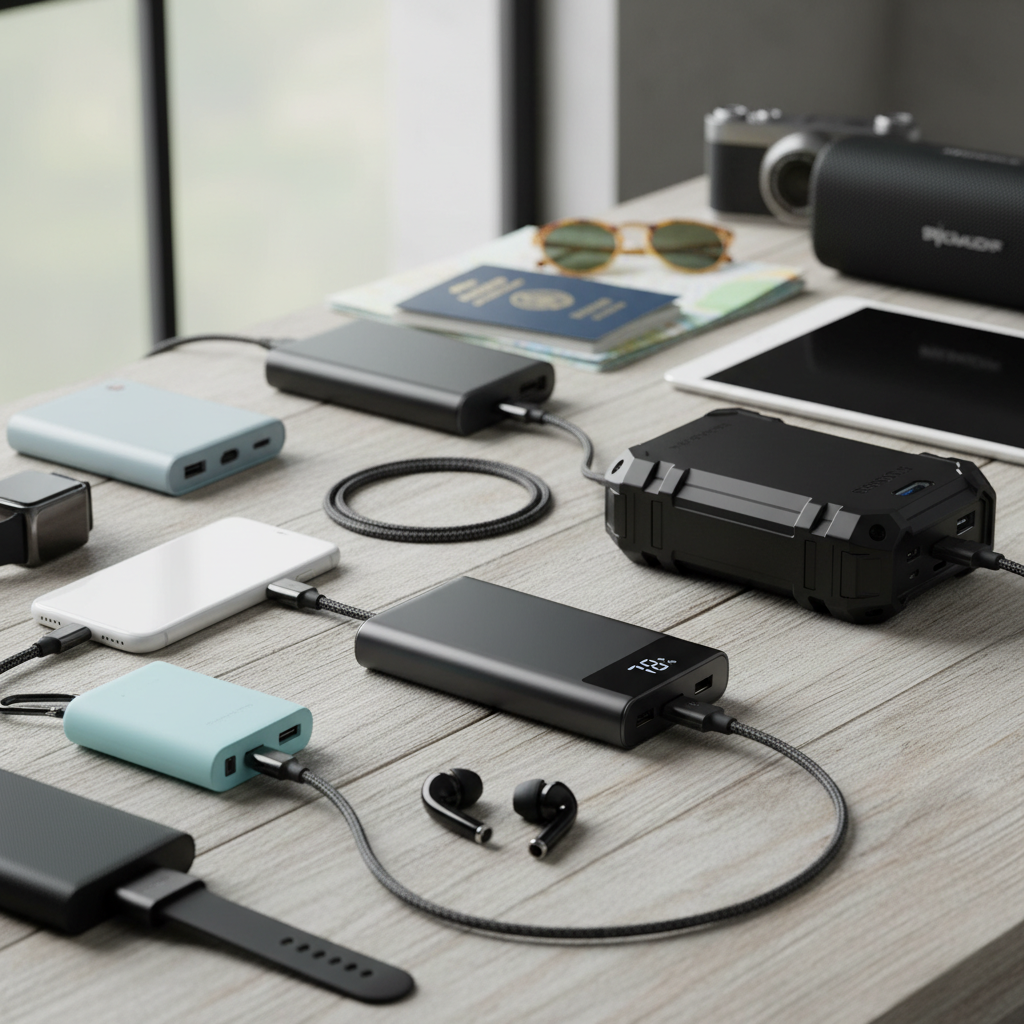
Understanding the Essentials: What is a Power Bank and Why Do We Need It?
A power bank, also known as a portable charger or external battery pack, is a compact device designed to store electrical energy and then deliver it to other electronic gadgets. Essentially, it’s a battery with circuitry to control power flow, allowing you to recharge smartphones, tablets, smartwatches, and even laptops without needing a wall outlet. While portable batteries have existed in various forms for decades, the modern power bank gained prominence with the rise of power-hungry mobile devices, evolving from basic battery packs to sophisticated charging hubs.
In our fast-paced lives, the importance of a power bank cannot be overstated. From long commutes and international travel to outdoor adventures and simply forgetting your charger at home, a reliable power bank acts as a lifeline, ensuring uninterrupted connectivity and productivity. It’s not just a convenience; for many, it’s a necessity that prevents critical communication breakdowns, missed navigation cues, or the inability to capture important memories.
Exploring the Spectrum: Types of Power Banks on the Market
The power bank market is diverse, offering a range of options categorized by their capacity, charging technology, and additional features. Understanding these distinctions is crucial for finding a device that perfectly aligns with your charging habits and lifestyle.
Power banks are primarily categorized by their capacity, measured in milliampere-hours (mAh).
- Small Capacity (5,000-10,000 mAh): These are lightweight and pocket-friendly, ideal for a single full smartphone charge or topping up smaller devices like earbuds. They are perfect for daily commutes or short outings.
- Medium Capacity (10,000-20,000 mAh): Offering 2-4 smartphone charges, these strike a balance between portability and power. They are well-suited for weekend trips or users with multiple devices like a phone and a tablet.
- Large Capacity (20,000-30,000 mAh): These are workhorses for frequent travelers or those needing to charge laptops and multiple gadgets for extended periods. They provide significant power but come with increased size and weight.
- Ultra-high Capacity (30,000+ mAh): Designed for serious power users, long expeditions, or group charging, these can power laptops multiple times and keep an array of devices running for days.
Beyond raw capacity, charging technology significantly impacts performance.
- Quick Charge (QC): Developed by Qualcomm, QC allows compatible devices to charge at a faster rate than standard USB charging.
- Power Delivery (PD): A more versatile standard, USB Power Delivery (PD) can deliver higher wattage (up to 100W or even 240W with USB-C PD 3.1), enabling rapid charging for not only phones but also tablets, laptops, and other power-hungry devices. Many modern power banks feature USB-C ports with PD for bidirectional fast charging.
- Wireless Charging (Qi/MagSafe/Qi2): Some power banks offer the convenience of wireless charging, allowing you to simply place a compatible device on the power bank without cables. MagSafe and Qi2 further enhance this with magnetic alignment and faster charging speeds for compatible iPhones and Android devices.
Finally, power banks come with various features that enhance usability. These can include integrated cables (USB-C, Lightning), built-in wall plugs for direct recharging, solar panels for emergency outdoor charging, rugged designs for durability, and digital displays that show battery percentage, input/output wattage, and estimated charging times.
Navigating Your Choices: A Guide to Selecting the Right Power Bank
Choosing the ideal power bank involves more than just picking the biggest number on the box. It requires a thoughtful assessment of your specific needs, an understanding of key technical specifications, and a strong emphasis on safety and brand reliability.
Determining Your Needs
Before diving into specifications, ask yourself:
- Which devices do you need to charge? A smartphone requires less capacity and wattage than a tablet or a laptop. For laptops, look for PD-enabled power banks with at least 30W output, preferably 60W or higher.
- How often will you use it, and for how long? For daily top-ups, a smaller capacity (5,000-10,000mAh) might suffice. For multi-day trips or heavy usage, 20,000mAh or more is advisable. Remember that a power bank’s actual output capacity is typically 60-80% of its labeled mAh due to energy conversion losses.
- Do you need special features? If you frequently travel, built-in cables or wireless charging can reduce clutter. For outdoor activities, consider rugged, water-resistant, or solar-charging models.
|
Our Picks for the Best Power bank in 2026
As an Amazon Associate I earn from qualifying purchases.
|
||
| Num | Product | Action |
|---|---|---|
| 1 | Anker Power Bank, 20,000mAh Travel Essential Portable Charger with Built-in USB-C Cable, 3-Port 87W Max Fast Charging Battery Pack, for MacBook, iPhone 16/15 Series, Samsung, Switch, and More |

|
| 2 | Anker Power Bank(PowerCore 10K), Compact Travel-Ready 10,000mAh Battery Pack with PowerIQ Charging Technology, 5V/3A High-Speed Charging for iPhone, iPad,and More (1, Black) |
|
| 3 | Anker 737 Power Bank, 140W Max 3-Port Laptop Portable Charger, 24,000mAh, Smart Display, Compatible with iPhone 16 / 15 / 14 Series, Vision Pro, Samsung, MacBook, and More |
|
| 4 | charmast Portable Charger with Built in Cables, Power Bank with Cords Wires, Slim 10000mAh Travel Battery Pack 6 Outputs 3 Inputs 5A Fast Charging for Samsung Google Pixel LG Moto iPhone iPad |
|
| 5 | INIU Portable Charger, Ultra Slim 45W Fast Charging with Attached USB C Cable, Flight-Safe 10000mAh PD Power Bank Battery Pack, Travel Essential Phone Powerbank for iPhone 17 16 Samsung S25 Google etc |
|
| 6 | Portable Charger Power Bank, 60000mAh Battery Pack with 3 in 1 USB-C/iOS/Micro-USB Cable, 22.5W Fast Charging Portable Phone Charger, Travel Camping Essential Powerbank for iPhone 17/16 Samsung,Ebony |
|
| 7 | UGREEN QI2 Power Bank, 8.6mm Ultra-Slim 5000mAh Magnetic Battery, 20W PD Fast Charging Portable Charger, MagSafe-Compatible External Battery for iPhone 17/16/15/14 Series, Blue |
|
| 8 | Anker Prime Power Bank, 26,250mAh 3-Port Portable Charger with 300W Max Output, Two-Way Charging, TSA-Approved, App Control, for MacBook, iPhone 17/16 Series, and More (Base Not Included) |
|
| 9 | Anker Zolo Power Bank (2025 Upgraded Version), 20,000mAh 30W High-Speed Portable Charger with Built-in USB-C Cable, Battery Pack for iPhone 17/16 / 15 Series, Galaxy, and More |
|
| 10 | Anker MagGo Power Bank, Ultra-Slim 10,000mAh Magnetic Battery Pack, Qi2 Certified 15W Ultra-Fast MagSafe Compatible Portable Charger, Ergonomic Design, for iPhone17/16/15/14 Series Only(Not for Pixel) |
|
[image-1|power-bank-suiting-needs|A person looking at various power banks, considering their travel and device charging needs.|
A person with a backpack and a smartphone, standing in front of a display of various power banks. The person is thoughtfully examining different power bank models, with focus on their size, capacity, and features relevant to travel and outdoor use. The background shows a subtle, modern tech store setting with soft lighting. Illustrative style, clean and bright.]
Crucial Specifications to Check
- Capacity (mAh and Wh): While mAh is common, Watt-hours (Wh) is often a more accurate measure of total energy storage and is crucial for airline regulations. A 10,000mAh power bank typically provides 1-2 full smartphone charges, while a 20,000mAh model offers 3-4 charges.
- Input/Output Voltage (V) and Current (A) / Wattage (W):
- Output: Higher wattage (W) and current (A) mean faster charging for your devices. Look for at least 18W (5V/3A or 9V/2A) for fast smartphone charging, and 30W+ for tablets or laptops. Multiple output ports are beneficial for charging several devices simultaneously.
- Input: Don’t forget the power bank’s own recharging speed. A high input wattage (e.g., 30W via USB-C PD) allows the power bank itself to recharge much faster, saving you hours.
- Port Types: Ensure the power bank has the necessary ports (USB-A for older devices, USB-C for modern ones). USB-C with Power Delivery is highly recommended for its versatility and speed.
Prioritizing Safety and Reliability
Safety should be your foremost concern when buying a power bank.
- Built-in Protections: A quality power bank will feature multiple safety mechanisms, including overcharge protection (prevents battery damage from continuous charging), short-circuit protection (guards against electrical faults), over-current protection, and over-temperature protection (prevents overheating, a critical safety issue for lithium-ion batteries).
- Reputable Brands and Certifications: Stick to well-known brands like Anker, Xiaomi, Samsung, Baseus, and Ugreen. These companies invest in R&D and adhere to international safety standards. Look for certifications such as CE, FCC, RoHS, or UL, which indicate compliance with safety and quality benchmarks.
- Build Quality and Durability: A power bank should feel solid and well-constructed, free from loose parts or flimsy plastics. Check reviews for comments on drop resistance or overall longevity, especially if you plan to use it in rugged environments.
The Contenders: Comparing Leading Power Bank Brands
The power bank market is dominated by several key players, each with unique strengths. Here’s a look at some prominent brands and what they offer:
Anker is widely regarded as a leader, known for its exceptional build quality, advanced charging technologies (like PowerIQ, GaN, and Power Delivery), and robust safety features. Their power banks often feature high durability and fast charging speeds, making them a premium choice for reliable performance, though typically at a higher price point. Anker’s range includes compact models like the MagGo series with MagSafe compatibility and high-capacity options for laptops.
Xiaomi offers a strong value proposition, combining competitive performance with budget-friendly pricing and sleek, minimalist designs. Xiaomi power banks are popular for their affordability and good-enough features for everyday users, though they might not always match the cutting-edge technology or extreme durability of top-tier brands like Anker.
Samsung provides power banks that often integrate seamlessly with its ecosystem of devices. Known for reliable performance and stylish designs, Samsung power banks can be a great choice for users loyal to the brand, often featuring specific optimizations for Samsung phones and tablets.
RAVPower has established itself as a reputable brand, offering a wide range of power banks known for good performance and a variety of options. They are a solid mid-range choice, delivering reliable charging without always pushing the boundaries of innovation in specific niches.
Baseus stands out for its innovative designs, often incorporating high-wattage outputs (e.g., 100W+ for laptops) and unique form factors like ultra-thin profiles. They aim to deliver a feature-rich experience at competitive prices, appealing to users looking for specific advanced functionalities.
Ugreen is a growing player that offers feature-packed power banks with competitive pricing and solid performance. Their products often include practical features like multiple ports, digital displays, and reliable fast-charging capabilities, making them a strong choice for users seeking good value.
Other notable brands include INIU, praised for its excellent value, portability, and decent capacity options; Mophie, known for robust power banks capable of charging larger devices like laptops; and EcoFlow, which offers high-capacity, rapid-charge power stations for more demanding power needs. Nitecore, OKZU, Goal Zero, and Zendure also provide specialized or budget-friendly options, particularly for outdoor and compact charging.
Detailed Comparison Table
| Brand | Key Strengths | Potential Drawbacks | Typical Price Range |
|---|---|---|---|
| Anker | High durability, advanced tech (PD, GaN), fast charging, excellent safety | Often a higher price point | Mid-High |
| Xiaomi | Budget-friendly, sleek design, good value for money | May not match premium features or extreme durability of high-end brands | Low-Mid |
| Samsung | Seamless ecosystem integration, reliable performance, stylish aesthetics | Price can be high, less universal feature set compared to generalists | Mid-High |
| RAVPower | Reputable, good all-around performance, wide range of options | Can be less innovative in specific niches, not always the fastest | Mid |
| Baseus | Innovative designs (e.g., thin profiles, high wattage), feature-rich | Brand recognition might be less for some, quality can vary across models | Mid |
| Ugreen | Competitive pricing, strong performance, practical features like displays | Newer to the premium segment, less established history in some markets | Mid |
| INIU | Excellent value, high portability for capacity, often includes bonus features | May not offer the absolute fastest charging or highest wattages | Low-Mid |
[image-2|various-power-bank-brands-comparison|A side-by-side comparison of different power bank brands, highlighting their unique features and designs.|
A clean, studio-style product shot featuring 4-5 diverse power bank models from different brands (Anker, Xiaomi, Baseus, Ugreen). Each power bank is distinct in color or shape, arranged neatly for comparison. White background with soft, even lighting, showcasing product details and modern aesthetics. Illustrative infographic style.]
Prolonging Lifespan: Best Practices for Power Bank Use and Maintenance
To ensure your power bank serves you reliably for years, proper usage and maintenance are key. Lithium-ion batteries, common in power banks, are sensitive to how they are charged, stored, and handled.
Charging Habits
- Charge Correctly: Always use the original charger and cable, or certified third-party accessories compatible with your power bank’s specifications. Using incompatible chargers can damage the battery or reduce charging efficiency.
- Avoid Overcharging: While most modern power banks have overcharge protection, continuously leaving them plugged in after reaching 100% can still stress the battery over time. It’s best to unplug it once fully charged.
- Prevent Deep Discharges: Try not to let your power bank’s battery drain completely to 0% frequently. Deep discharges can degrade battery health. Aim to recharge it when it drops to around 20% to extend its lifespan.
Storage Guidelines
- Maintain Optimal Charge Level: For long-term storage (if not using for several weeks or months), it’s best to store your power bank at a charge level of 30% to 50%. Fully charged or completely empty batteries degrade faster in storage. Recharge it every three months if stored for extended periods.
- Avoid Extreme Temperatures: High heat (e.g., direct sunlight, inside a hot car) and extreme cold can severely damage the internal battery components, reducing capacity and potentially posing safety risks. Store your power bank in a cool, dry place, ideally between 0°C and 35°C (32°F and 95°F).
- Keep Away from Humidity: Moisture can short-circuit internal electronics. Ensure your power bank remains dry and away from humid environments.
Physical Care
- Keep it Clean: Regularly inspect and gently clean the charging ports (USB-A, USB-C, Micro USB) with a dry cotton swab, a soft brush, or compressed air to remove dust, lint, or debris that could impede connections. Avoid liquids or sharp objects.
- Avoid Physical Damage: Do not drop, puncture, crush, or disassemble the power bank. Physical impact can damage the internal lithium-ion cells, leading to malfunctions or safety hazards.
- Use Quality Accessories: Always use high-quality, undamaged cables and adapters. Faulty accessories can cause inefficient charging, damage ports, or even create safety risks.
Common Roadblocks: Troubleshooting Power Bank Issues
Even with the best power banks, you might occasionally encounter issues. Here are some common problems and how to troubleshoot them:
Power bank not charging (itself or devices)
- Check Cables and Adapters: The most common culprit is a faulty cable or wall adapter. Try using a different, known-good cable and a reliable wall adapter.
- Inspect Ports: Examine the power bank’s input/output ports and your device’s charging port for any debris, lint, or damage. Gently clean them if necessary with a non-metallic tool.
- Try Different Outlets/Devices: Plug the power bank into a different wall outlet or attempt to charge a different device to narrow down whether the issue lies with the power bank, the outlet, or the device being charged.
- Reset: Some power banks have a reset button or can be reset by simultaneously pressing multiple buttons (refer to the user manual).
Slow charging speeds
- Check Compatibility: Ensure both your power bank and your device support fast-charging protocols (e.g., Quick Charge, Power Delivery) and that the power bank’s output wattage matches your device’s maximum input. Using a standard cable with a fast-charging port, or vice versa, can result in slower speeds.
- Use Quality Cables: Cheap or damaged cables can significantly reduce charging speed.
- Overheating: If the power bank is overheating, it may automatically reduce charging speed to protect itself. Allow it to cool down.
- Power Bank Charge Level: Charging efficiency can sometimes decrease when the power bank itself is very low on battery.
Overheating during use
- Normal vs. Excessive Heat: It’s normal for a power bank to get slightly warm during use or charging, especially with fast charging. However, if it becomes uncomfortably hot to touch, or emits a burning smell, it’s a cause for concern.
- Immediately Unplug: If excessive heat is detected, unplug the power bank from all devices and its charging source immediately.
- Avoid Restricted Airflow: Ensure the power bank is not covered or placed in an environment with poor ventilation (e.g., under a pillow, in a tight bag) while charging or discharging.
- Replace if Persistent: If a power bank consistently overheats even under normal conditions, it might indicate an internal fault and should be safely replaced. Do not attempt to repair it yourself.
Smart Strategies: Tips and Tricks for Maximizing Your Power Bank
Getting the most out of your power bank goes beyond basic usage. Smart strategies can enhance its efficiency, longevity, and usefulness in various situations.
- Optimize Usage Time: For prolonged power, prioritize charging devices that are critically low rather than constantly topping up devices that are already at 70-80%. Use your power bank’s fast charging capabilities judiciously; while convenient, continuous high-speed charging can generate more heat.
- Emergency Preparedness: A fully charged power bank is a crucial part of any emergency kit. Keep a high-capacity unit charged and ready for power outages, natural disasters, or unexpected travel delays. Consider models with built-in flashlights for added utility.
- Leverage Advanced Features: Many modern power banks offer intelligent features like pass-through charging (charging the power bank while it simultaneously charges a device), which can be incredibly useful when you only have one outlet. Digital displays provide real-time information on battery levels, input/output wattage, and even charging duration, helping you manage power more effectively.
- Multi-Device Management: If you carry multiple devices, invest in a power bank with several output ports and sufficient total output wattage to efficiently charge all your gadgets simultaneously. This prevents the need for multiple smaller power banks or waiting for devices to charge sequentially.
- Travel Smart: When traveling, especially by air, be mindful of airline restrictions. Power banks must be carried in your carry-on luggage (never checked) and have capacity limits, usually under 100Wh (approx. 27,000mAh) without special airline approval. Ensure its capacity is clearly labeled.
The Ultimate Buying Guide for Power Banks
Choosing the perfect power bank can seem daunting, but by following a structured approach, you can confidently select a device that meets all your charging needs.
-
Assess Your Usage Needs:
- Device Compatibility: What devices will you primarily charge (smartphone, tablet, laptop, earbuds, camera)? This determines necessary wattage and port types.
- Charging Frequency: Do you need daily top-ups, several charges for a weekend, or extended power for multi-day trips? This dictates the required capacity.
- Special Requirements: Do you need wireless charging, built-in cables, a rugged design, or specific aesthetic preferences?
-
Evaluate Capacity Requirements (mAh / Wh):
- Smartphone Users: 5,000-10,000mAh for 1-2 charges.
- Multi-Device Users / Short Trips: 10,000-20,000mAh for 2-4 charges.
- Heavy Users / Laptops / Long Trips: 20,000mAh+ for multiple charges and laptop support.
- Rule of Thumb: Choose a power bank with at least 20-30% more capacity than your device’s battery to account for energy conversion losses.
-
Prioritize Charging Speed (Wattage / PD / QC):
- Look for power banks that support fast charging protocols like Power Delivery (PD) via USB-C or Quick Charge (QC).
- Ensure the output wattage (W) is compatible with your devices’ fast-charging capabilities (e.g., 18W+ for phones, 30W+ for tablets, 45W-100W for laptops).
- Consider input wattage for the power bank itself – a higher input means faster recharging of the power bank.
-
Examine Portability and Design:
- Size and Weight: Balance capacity with portability. Smaller capacities are pocket-friendly; larger ones are heavier but offer more power.
- Features: Decide if built-in cables, wireless charging, LED displays, or a robust, waterproof design are important for your lifestyle.
-
Verify Safety Features:
- Protections: Confirm the power bank includes essential safety features such as overcharge, short-circuit, over-current, and over-temperature protection.
- Certifications: Look for recognized safety certifications (CE, FCC, RoHS, UL).
- Brand Reputation: Stick to reputable brands known for quality and safety.
-
Read Reviews and Brand Reputation:
- Consult expert reviews and user feedback to gauge real-world performance, durability, and customer satisfaction.
- Research the brand’s warranty and customer support policies.
-
Consider Budget vs. Features:
- Determine your budget, but be wary of extremely cheap, unbranded power banks, as they often compromise on safety and quality.
- Balance the cost with the features and performance you genuinely need. Investing a bit more in a reliable, feature-rich power bank can save you money and frustration in the long run.
Ultimately, the best power bank is one that reliably meets your daily charging demands while offering the right blend of capacity, speed, and safety features for your specific lifestyle.
Conclusion
In an age where our lives are inextricably linked to our electronic devices, a reliable power bank is no longer a luxury but an indispensable tool for staying connected and productive. From the lightweight convenience of a 5,000mAh unit for daily errands to the robust power of a 27,000mAh titan capable of charging laptops, the market offers a solution for every need. By understanding critical factors like capacity, charging technology, and essential safety features, you can confidently navigate the myriad of options available. Investing in a high-quality power bank from a reputable brand ensures not only consistent performance but also the peace of mind that comes with safe and efficient charging. So, what will your next power bank empower you to do?
Frequently Asked Questions
What does mAh mean in a power bank?
mAh, or milliampere-hour, is a unit of electric charge capacity. In power banks, it indicates how much energy the battery can store. A higher mAh rating generally means the power bank can provide more charges or power larger devices for longer durations before needing to be recharged itself.
How many times can a 10,000mAh power bank charge my phone?
A 10,000mAh power bank typically provides 1 to 2 full charges for most modern smartphones. This estimate accounts for energy conversion losses that occur during the charging process, meaning the usable output capacity is usually around 60-80% of the stated mAh.
Is it safe to use a power bank to charge my laptop?
Yes, it can be safe if the power bank is specifically designed for laptops, usually featuring USB-C Power Delivery (PD) with a high wattage output (e.g., 45W, 60W, 100W). Ensure the power bank’s output specifications match or exceed your laptop’s charging requirements, and always use a reputable brand with multiple safety protections.
How long do power banks typically last?
A good quality power bank typically lasts for 300 to 1,000 charge-discharge cycles. With proper care, this can translate to several years of use. Factors like avoiding extreme temperatures, not overcharging or deeply discharging, and using quality accessories significantly extend its lifespan.
Can I take my power bank on a plane?
Yes, but only in your carry-on luggage, never in checked baggage, due to fire risks. Most airlines allow power banks under 100 Watt-hours (Wh), which is approximately 27,000mAh, without special approval. For capacities between 100Wh and 160Wh (approx. 43,000mAh), airline approval is usually required, and anything above 160Wh is generally prohibited.