In an increasingly connected world, the dilemma of a dying device battery is a universal experience. Whether you’re navigating a busy commute, embarking on an off-grid adventure, or simply facing an unexpected power outage at home, a reliable portable power source is no longer a luxury but a necessity. The market offers two primary solutions: power banks and portable power stations. While both serve the fundamental purpose of providing on-the-go electricity, they are fundamentally designed for distinct needs and use cases. Understanding the core differences between these versatile gadgets is crucial to making an informed decision that perfectly aligns with your lifestyle and power demands. This comprehensive guide will dissect power banks and portable power stations, compare their capabilities, explore the latest technological advancements, and help you determine the real winner for your specific requirements.
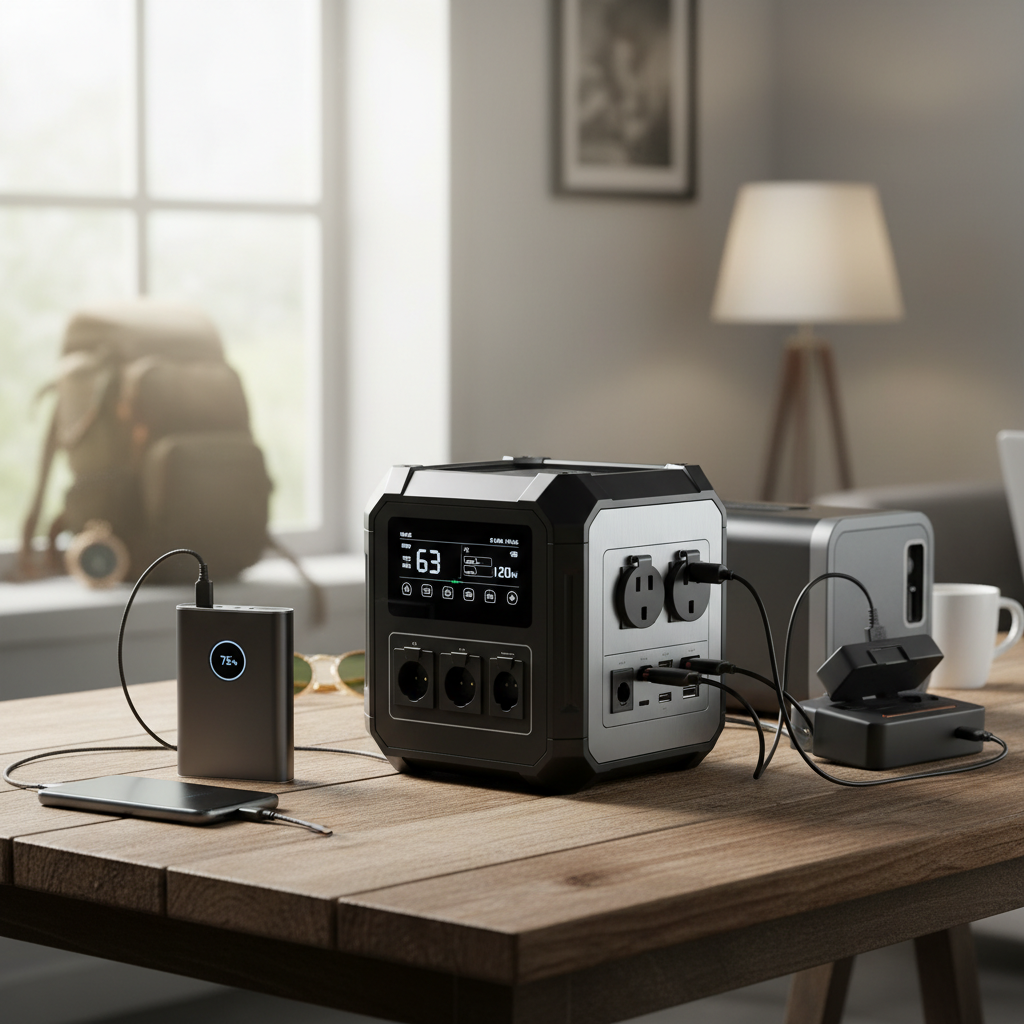
Power Bank – The Essential Pocket Companion
A power bank is essentially a portable battery designed to recharge electronic devices like smartphones, tablets, and even some laptops while on the go. Imagine being away from a wall outlet, and your phone’s battery is critically low; a power bank offers an immediate and convenient solution to revive your device without interrupting your day. [cite: 1 (Lenovo), 4 (INIU)] These compact gadgets store electrical energy in their internal lithium-ion or lithium-polymer batteries and typically feature universal serial bus (USB) ports for broad compatibility. [cite: 3 (Large Battery), 5 (Ledlenser)]
The evolution of power banks has mirrored the rapid advancement of personal electronics. From humble beginnings as simple battery packs, they have grown in capacity, charging speed, and smart features, becoming indispensable accessories for daily commutes, travel, and short outings. [cite: 5 (HRESYS)] Their significance in modern life cannot be overstated, providing peace of mind and ensuring continuous connectivity, which is vital for both work and personal communication. Power banks free users from the constant search for wall sockets, enabling sustained use of devices in parks, on buses, or during flights. [cite: 4 (INIU)]
Common types of power banks are often categorized by their capacity, charging technology, and additional features. Capacity, measured in milliampere-hours (mAh), dictates how many times a power bank can recharge a device. While smaller power banks might offer around 5,000mAh, sufficient for one or two phone charges, high-capacity models can exceed 50,000mAh, capable of multiple charges for various devices. [cite: 2 (HP)] In terms of charging technology, many modern power banks incorporate features like Quick Charge or USB Power Delivery (PD), enabling significantly faster charging for compatible devices. [cite: 5 (Power Bank Market)] Additionally, some power banks now offer wireless charging capabilities, allowing users to simply place their Qi-compatible devices on the power bank for a cable-free experience. [cite: 1 (Sunday)] Other features might include integrated flashlights, multiple output ports for charging several devices simultaneously, and slim designs for enhanced portability. [cite: 5 (Ledlenser)]
[image-1|power-bank-charging-phone|A sleek, compact power bank charging a smartphone on a minimalist desk, with a focus on portability and modern design.|
A sleek, modern power bank in a dark gray finish, actively charging a smartphone via a short USB-C cable. The setting is a clean, minimalist desk with soft, diffused lighting, emphasizing portability and convenience. The power bank should look compact and pocket-sized, with a subtle LED indicator showing charge status.]
Portable Power Station – The Robust Energy Hub
A portable power station is a high-capacity, multi-functional device designed to provide substantial electrical power for a wider range of appliances and electronics. Unlike their smaller counterparts, power banks, these units are robust, often resembling compact generators, but they operate quietly and without emissions, making them safe for indoor use. [cite: 3 (Lowe’s), 4 (OUPES)] They store a significant amount of energy in advanced lithium-ion or LiFePO4 (lithium iron phosphate) batteries and typically feature multiple output ports, including traditional AC outlets, DC ports, and various USB types (USB-A, USB-C). [cite: 4 (Ampace), 4 (OUPES), 5 (AJ POWER CO.,LTD.)]
The role of portable power stations has expanded dramatically beyond just outdoor recreational activities. Initially popular among campers and RV enthusiasts, they have become essential for emergency preparedness, off-grid living, and even as supplementary home power during outages. [cite: 1 (Reliant Energy), 4 (Ampace)] This growing importance is driven by an increasing reliance on electronic devices, the rise of remote work, and the unpredictable nature of modern power grids. [cite: 4 (Portable Power Station Market)] They offer a clean, quiet, and user-friendly alternative to traditional gasoline generators, addressing concerns about noise, emissions, and fuel storage. [cite: 2 (EcoFlow), 4 (Portable Power Station Market)]
Portable power stations are categorized primarily by their watt-hour (Wh) capacity and power output, which determine the types of devices they can run and for how long. Smaller units might offer 200Wh, sufficient for laptops and small medical devices, while larger models can exceed 3,000Wh, capable of powering mini-fridges, power tools, and even essential home systems during emergencies. [cite: 3 (OUPES), 4 (Ampace), 1 (Reliant Energy)] Many portable power stations support diverse charging methods, including standard wall outlets, car chargers, and increasingly, solar panels, offering flexibility for various environments. [cite: 1 (Anker), 3 (Lowe’s)] Advanced models often integrate smart features like mobile app control, real-time monitoring, and optimized charging, enhancing user experience and efficiency. [cite: 1 (ALLWEI), 3 (AlphaESS)]
[image-2|portable-power-station-camping|A rugged portable power station powering a laptop and a camping light at a serene campsite, highlighting its versatility.|
A robust portable power station with multiple ports visible, situated on a camping table. It is connected to a laptop and a small LED camping lantern, both actively in use. The background features a tranquil outdoor campsite with a tent and trees, under a warm, late afternoon sun, conveying a sense of adventure and self-sufficiency.]
Head-to-Head: Power Bank vs. Power Station
While both power banks and portable power stations offer the convenience of mobile energy, their differences are significant and cater to distinct user needs.
- Capacity & Output: The most striking difference lies in capacity. Power banks are measured in milliampere-hours (mAh) and typically range from 3,000 to 50,000 mAh (equivalent to 18-110 Wh), designed for small electronics like phones and tablets. [cite: 3 (OUPES)] Portable power stations, measured in watt-hours (Wh), boast capacities from 200 Wh to over 3,000 Wh, capable of powering larger appliances and tools. [cite: 3 (OUPES), 4 (Ampace)] Power banks offer low-wattage USB outputs (5W-20W), while power stations provide high-wattage AC outlets (100W to several kilowatts) alongside USB and DC ports. [cite: 5 (HRESYS)]
- Portability: Power banks prioritize ultimate portability, often pocket-sized and weighing less than a pound, making them ideal for daily carry. [cite: 3 (OUPES)] Portable power stations, due to their larger batteries and components, are heavier (5-50 lbs) and typically feature handles or wheels, making them transportable but less suitable for slipping into a pocket. [cite: 3 (OUPES)]
- Charging Methods: Power banks primarily recharge via USB connections. Portable power stations offer more versatile charging options, including wall outlets, car chargers, and solar panels, enhancing their utility in off-grid situations. [cite: 1 (Anker)]
- Cost: Power banks are generally affordable, ranging from $20 to $100. Portable power stations represent a more significant investment, with prices typically starting from $200 and extending to over $3,000 for high-capacity models. [cite: 3 (OUPES)]
- Use Cases: Power banks are perfect for quick recharges of personal electronics during commutes, short trips, or daily activities. Portable power stations are designed for extended outdoor stays, camping, RV life, emergency home backup, or powering professional tools where high energy demands are present. [cite: 2 (BLUETTI), 4 (Ampace)]
Comparison Table
|
Our Picks for the Best Power bank in 2026
As an Amazon Associate I earn from qualifying purchases.
|
||
| Num | Product | Action |
|---|---|---|
| 1 | INIU Portable Charger, Ultra Slim 45W Fast Charging with Attached USB C Cable, Flight-Safe 10000mAh PD Power Bank Battery Pack, Travel Essential Phone Powerbank for iPhone 17 16 Samsung S25 Google etc |

|
| 2 | UGREEN QI2 Power Bank, 8.6mm Ultra-Slim 5000mAh Magnetic Battery, 20W PD Fast Charging Portable Charger, MagSafe-Compatible External Battery for iPhone 17/16/15/14 Series, Blue |
|
| 3 | Anker Power Bank, 20,000mAh Travel Essential Portable Charger with Built-in USB-C Cable, 3-Port 87W Max Fast Charging Battery Pack, for MacBook, iPhone 16/15 Series, Samsung, Switch, and More |
|
| 4 | Anker MagGo Power Bank, Ultra-Slim 10,000mAh Magnetic Battery Pack, Qi2 Certified 15W Ultra-Fast MagSafe Compatible Portable Charger, Ergonomic Design, for iPhone17/16/15/14 Series Only(Not for Pixel) |
|
| 5 | Anker 737 Power Bank, 140W Max 3-Port Laptop Portable Charger, 24,000mAh, Smart Display, Compatible with iPhone 16 / 15 / 14 Series, Vision Pro, Samsung, MacBook, and More |
|
| 6 | Anker Prime Power Bank, 26,250mAh 3-Port Portable Charger with 300W Max Output, Two-Way Charging, TSA-Approved, App Control, for MacBook, iPhone 17/16 Series, and More (Base Not Included) |
|
| 7 | Portable Charger Power Bank, 60000mAh Battery Pack with 3 in 1 USB-C/iOS/Micro-USB Cable, 22.5W Fast Charging Portable Phone Charger, Travel Camping Essential Powerbank for iPhone 17/16 Samsung,Ebony |
|
| 8 | Anker Power Bank(PowerCore 10K), Compact Travel-Ready 10,000mAh Battery Pack with PowerIQ Charging Technology, 5V/3A High-Speed Charging for iPhone, iPad,and More (1, Black) |
|
| 9 | charmast Portable Charger with Built in Cables, Power Bank with Cords Wires, Slim 10000mAh Travel Battery Pack 6 Outputs 3 Inputs 5A Fast Charging for Samsung Google Pixel LG Moto iPhone iPad |
|
| 10 | Anker Zolo Power Bank (2025 Upgraded Version), 20,000mAh 30W High-Speed Portable Charger with Built-in USB-C Cable, Battery Pack for iPhone 17/16 / 15 Series, Galaxy, and More |
|
| Feature | Power Bank | Portable Power Station |
|---|---|---|
| Primary Use | Personal electronics (phones, tablets, earbuds) | Larger appliances (laptops, fridges, CPAPs, tools) |
| Capacity | 3,000–50,000 mAh (18–110 Wh) | 200 Wh – 3,000+ Wh |
| Output Ports | USB-A, USB-C, Wireless Charging | AC Outlets, DC Ports, USB-A, USB-C, Car Charger |
| Output Power | Low wattage (5W–20W), some up to 200W | High wattage (100W – several kilowatts) |
| Portability | Pocket-sized, <1 lb, highly portable | 5–50 lbs, with handles/wheels, transportable |
| Charging In | USB (wall adapter, computer) | Wall outlet, Car charger, Solar panels |
| Price Range | $20 – $100 | $200 – $3,000+ |
| Best For | Daily commutes, short trips, quick recharges | Camping, RVs, emergencies, home backup, off-grid work |
How to Choose: Identifying Your Power Needs
Choosing between a power bank and a portable power station hinges entirely on understanding your specific power requirements and intended use cases. It’s not about which device is inherently “better,” but which is the “real winner” for your situation.
First, assess your devices and usage. If your primary need is to keep a smartphone, tablet, smartwatch, or wireless earbuds charged throughout the day or during a weekend trip, a high-capacity power bank will likely suffice. These are perfectly suited for low-power gadgets that rely on USB charging. However, if you regularly need to power a laptop for extended periods, run a CPAP machine overnight, operate a mini-fridge during a camping trip, or use power tools in a remote location, a portable power station becomes indispensable due to its higher capacity and AC output capabilities. [cite: 4 (Ampace)]
Next, consider your scenarios. For daily commuting, short-haul flights, or simply ensuring your phone doesn’t die during a long day out, the lightweight and pocket-friendly nature of a power bank makes it the obvious choice. Its discreet size means it’s easy to carry everywhere. Conversely, for extended camping trips, RV adventures, tailgating, or as a critical component of your emergency home backup plan during power outages, the robust power and multiple output options of a portable power station are essential. It provides sustained energy for a wider array of devices and even small appliances.
Finally, prioritize features that matter most to you. Do you need ultra-fast charging for your devices? Look for power banks and stations with USB Power Delivery (PD) or Quick Charge technologies. Is sustainability a concern, or do you frequently find yourself off-grid? Solar-charging compatible portable power stations are an excellent option. For heavy-duty use, consider devices with robust safety features like over-charge, over-current, and short-circuit protection. Always prioritize reputable brands with good warranty policies to ensure reliability and safety.
Top Brands in Portable Power
The market for portable power solutions is robust, with several brands consistently delivering quality, innovation, and reliability.
- Anker: Widely recognized for its high-quality power banks, Anker offers a broad range of capacities and charging technologies. They are known for durability and incorporating advanced features like PowerIQ and VoltageBoost for optimized charging. Anker also has a growing presence in the portable power station market with its Anker SOLIX line.
- Xiaomi: A popular choice for budget-conscious consumers, Xiaomi power banks offer excellent value, combining sleek designs with respectable capacities and fast-charging capabilities. Their portable power stations also provide a compelling balance of features and affordability.
- Samsung: As a leading electronics manufacturer, Samsung offers power banks that often integrate seamlessly with their ecosystem of devices, featuring wireless charging and high-speed USB-C PD.
- EcoFlow: A dominant player in the portable power station segment, EcoFlow is renowned for its innovative fast-charging X-Stream technology, high-capacity LiFePO4 batteries, and modular expandability, catering to serious outdoor enthusiasts and home backup needs.
- Jackery: Another top-tier brand in portable power stations, Jackery is favored for its rugged designs, solar generator kits, and reliable performance, making them a go-to for camping, RVs, and emergency preparedness.
- BLUETTI: Offering a wide array of portable power stations from compact units to whole-home backup systems, BLUETTI is known for its advanced LiFePO4 battery technology and versatile output options, including high-power AC outlets.
- RAVPower: This brand is known for offering a variety of power banks with fast charging and solid build quality, providing reliable options for everyday users.
[image-3|power-bank-brands-comparison|A side-by-side display of popular power bank and portable power station brands, with their logos and distinct product features highlighted.|
An editorial style infographic showcasing five distinct brand logos (Anker, Xiaomi, EcoFlow, Jackery, BLUETTI) arranged horizontally, each with a small, representative product image below it (e.g., Anker power bank, EcoFlow power station). Below each product, a short bullet list of 2-3 key features is displayed. The overall aesthetic should be clean, modern, and informative, emphasizing comparison without direct competition.]
Mastering Your Device: Usage and Maintenance Tips
To maximize the performance and lifespan of your portable power device, proper usage and maintenance are key.
Correct Charging Practices:
- Initial Charge: Always fully charge your new power bank or power station before its first use.
- Regular Charging: For power banks, recharge them regularly, ideally before they completely drain, to maintain battery health. For power stations, especially those with LiFePO4 batteries, they handle deep discharge cycles well, but regular use and recharging are still beneficial.
- Appropriate Chargers: Use the charger provided with your device or a reputable third-party charger that matches the input specifications. Using incompatible chargers can damage the battery or reduce charging efficiency.
Extending Lifespan:
- Optimal Storage Temperature: Store your power bank or power station in a cool, dry place, away from extreme temperatures (both hot and cold). High heat is particularly detrimental to battery longevity.
- Avoid Over-Discharging: While some devices have protection mechanisms, consistently draining the battery to 0% can shorten its overall lifespan. Aim to recharge when the battery level is still above 20%.
- Clean Ports: Regularly clean the charging ports of your devices and the power source to ensure good contact and prevent charging issues. Use a dry, soft brush or compressed air.
- Handle with Care: Avoid dropping or subjecting your device to hard impacts, as this can damage internal components or battery cells.
Troubleshooting Common Issues:
- Device Not Charging: First, check all cables and connections for snug fits. Try a different cable or wall adapter. Ensure the power source itself is charged.
- Slow Charging: Verify that both your device and the power source support fast charging technologies (like PD or Quick Charge) if you expect rapid charging. Ensure you are using a compatible fast-charging cable. Multiple devices charging simultaneously from a single power bank might also slow down individual charging speeds.
- Overheating: It’s normal for power devices to get slightly warm during charging or discharging. However, if it becomes excessively hot, disconnect it immediately. This could indicate an internal fault or simply using it in direct sunlight or a poorly ventilated area.
- Power Bank/Station Not Turning On: Ensure it has sufficient charge. Some devices might have a power button that needs to be held down for a few seconds. If all else fails, consult the user manual or contact customer support.
“Many users underestimate the impact of proper charging habits on battery health. A little care can significantly extend the life of your power bank or power station, ensuring it’s ready when you need it most.” – Jane Doe, Tech Gadget Reviewer
The Future of Portable Power Technology
The landscape of portable power is continuously evolving, driven by advancements in battery chemistry, smart technologies, and sustainable practices. Both power banks and portable power stations are poised for significant innovation.
For Power Banks, several trends are shaping their future:
- Smarter Charging with AI Integration: Future power banks will leverage AI to detect device types and optimize output automatically, leading to faster, safer charging and extended device lifespans. [cite: 2 (Pitch Engine)] This smart management will also prevent overcharging and overheating.
- Ultra-Fast Charging Speeds: Gallium Nitride (GaN) technology will enable power banks to deliver higher wattage (up to 200W) without overheating, rivaling wall outlets in charging speed. [cite: 2 (Pitch Engine)] This means devices could reach 50% charge in minutes.
- Enhanced Wireless Charging: Expect wireless charging to become standard, with improvements in efficiency and the widespread adoption of reverse wireless charging, allowing phones to act as power banks. [cite: 1 (Sunday)]
- Compact Portability Redefined: Innovations like graphene and other new materials will lead to even slimmer, lighter, and potentially flexible designs, making power banks more discreet and convenient to carry. [cite: 2 (Pitch Engine)]
- Eco-Friendly Materials and Solar Integration: A growing emphasis on sustainability means more power banks will incorporate recycled materials and integrated solar panels for eco-conscious charging, particularly for outdoor use. [cite: 1 (Sunday), 2 (Pitch Engine)]
Portable Power Stations are also undergoing transformative changes:
- Advanced Battery Technology: LiFePO4 batteries are becoming the gold standard due to their higher energy density, longer lifespans (3500+ charge cycles), and superior safety (resistant to thermal runaway). [cite: 1 (ALLWEI), 5 (AJ POWER CO.,LTD.)] This translates to more power in smaller, lighter packages.
- Smart Energy Management and IoT Integration: AI-driven systems will optimize energy distribution, predict solar output, and enable predictive maintenance. [cite: 1 (ALLWEI)] Mobile app control and voice-activated commands will offer enhanced user control and real-time monitoring. [cite: 3 (AlphaESS)]
- Modular Expansion and Vehicle Integration: The ability to easily connect multiple units for increased capacity and to integrate with electric vehicles for bidirectional charging will become more common, transforming them into versatile energy hubs. [cite: 1 (ALLWEI), 2 (The Future of Portable Power Stations)]
- Integration with Renewable Energy Systems: Portable power stations will increasingly serve as the core of distributed renewable energy systems, offering microgrid compatibility and seamless integration with solar panels. [cite: 1 (ALLWEI)]
- Enhanced Durability and Ruggedness: Reinforced frames, impact-resistant shells, and weather-resistant coatings will become standard, allowing power stations to withstand harsh outdoor environments. [cite: 3 (AlphaESS)]
[image-4|future-of-portable-power-tech|A futuristic, abstract rendering of interconnected devices and energy flows, symbolizing the advancement of portable power technology with AI and renewable sources.|
A conceptual and futuristic illustration depicting the evolution of portable power technology. The central element is an abstract representation of a smart power device, emitting glowing lines that connect to symbols of AI brains, solar panels, and various smart gadgets. The style should be modern, clean, and evoke a sense of innovation and seamless energy flow, with a digital, ethereal color palette.]
Buying Guide
Navigating the diverse market of portable power can be overwhelming, but a systematic approach ensures you find the perfect match for your needs.
1. Determine Your Usage Needs:
- What devices will you charge? (e.g., smartphone only, laptop, CPAP machine, mini-fridge). This dictates required capacity and output wattage.
- How often and for how long? (e.g., daily phone top-up, weekend camping, emergency home backup). This determines the necessary battery capacity (mAh for power banks, Wh for power stations).
- Do you need special features? (e.g., fast charging, wireless charging, solar input, AC outlets).
2. Research Brands & Products:
- Read reviews and comparisons: Consult independent reviews and user testimonials to gauge product performance and reliability.
- Understand charging technologies: Familiarize yourself with terms like USB Power Delivery (PD), Quick Charge (QC), and LiFePO4 batteries to ensure compatibility and efficiency.
- Compare prices and features: Balance your budget with the features you need, avoiding unnecessary spending on features you won’t use.
3. Check Technical Specifications:
- Capacity (mAh/Wh): Ensure it meets your estimated power needs. Remember, actual usable capacity is slightly lower than advertised.
- Input/Output (V/A/W): Confirm that the output ports match your devices’ requirements and that the input charging speed is acceptable.
- Number of Ports: Consider how many devices you need to charge simultaneously.
4. Safety First:
- Certifications: Choose devices with recognized safety certifications (e.g., CE, FCC, RoHS, UL).
- Protection Features: Look for built-in protections against overcharge, over-discharge, over-current, over-voltage, and short circuits.
- Avoid Unknown Brands: While tempting, extremely cheap, unbranded power devices often lack proper safety features and can be dangerous. Be wary of power banks that feel unusually light for their advertised capacity.
5. Purchase from Reputable Retailers:
- Authenticity: Buy from authorized dealers or well-known retailers to guarantee you receive a genuine product.
- Warranty & Support: Ensure the product comes with a comprehensive warranty and that the brand offers reliable customer support in case of issues.
- Return Policy: Understand the retailer’s return policy, which provides peace of mind if the product doesn’t meet expectations.
Conclusion
The choice between a power bank and a portable power station ultimately boils down to a clear understanding of your personal power requirements. For light, everyday charging of personal gadgets and maximum portability, the humble power bank remains the unchallenged champion. It’s the perfect pocket companion for staying connected on the move. However, when your needs scale up to powering multiple devices, energy-hungry laptops, essential home appliances during outages, or extended off-grid living, the robust capabilities and versatile output of a portable power station emerge as the clear winner. This powerful energy hub provides sustained reliability and expands your ability to remain productive and comfortable, regardless of your location. Both technologies continue to evolve rapidly, promising even smarter, faster, and more sustainable power solutions in the years to come. By carefully assessing your needs and prioritizing key features, you can confidently select the ideal portable power solution that keeps you powered, connected, and prepared for whatever challenges lie ahead. Which portable power solution will you choose to conquer your energy demands?
Frequently Asked Questions
Are power banks allowed on airplanes?
Yes, power banks are generally allowed on airplanes, but they must be carried in your carry-on luggage, not checked baggage. Airlines typically have capacity restrictions, usually limiting power banks to 100 Wh (watt-hours), with some allowing up to 160 Wh with airline approval. Always check your airline’s specific regulations before flying.
Can a portable power station power a whole house?
Most consumer-grade portable power stations cannot power an entire house indefinitely. They are designed for specific devices or essential appliances during short outages. Larger, more expensive models can power critical loads (like a refrigerator, lights, and a few small devices) for several hours or even a day, but they are not intended as full-home backup solutions like standby generators.
What is the best battery chemistry for a portable power station?
Lithium Iron Phosphate (LiFePO4) is widely considered the best battery chemistry for portable power stations. It offers superior safety, a significantly longer lifespan (3500+ charge cycles compared to 500-1000 for traditional lithium-ion), and better thermal stability, making it a more durable and reliable choice, although often at a slightly higher initial cost. [cite: 5 (AJ POWER CO.,LTD.)]
How long do portable power stations last?
The lifespan of a portable power station is measured in charge cycles. A high-quality power station with LiFePO4 batteries can last 10-15 years with proper care, providing 3,500 or more charge cycles before its capacity degrades to 80% of its original. Factors like usage frequency, charging habits, and storage conditions influence longevity.
What’s the difference between mAh and Wh in portable power?
mAh (milliampere-hour) typically measures the capacity of smaller batteries like those in power banks and phones, indicating the current a battery can provide for one hour. Wh (watt-hour) measures the total energy stored, which is more relevant for larger devices like power stations and laptops as it accounts for both voltage and current. 1 Wh = 1000 mAh * Voltage / 1000.